
2025
ANNUAL REPORT

A Message from Warren Driechel, Chief of Police
It has been a time of change at the Edmonton Police Service (EPS). With new leadership comes new opportunities and perspective, and I intend to make the most of it. The gravity of this job is not lost on me. As the first internal chief appointed in 20 years, I take the safety of our city personally. It is a privilege to lead an organization I know so well in a city I care for so deeply.
The last year was one of transition, but we still noted some excellent strides forward. From seeing the first significant improvement in perceived public safety since 2020, to the reinstatement of the School Resource Officer Program in public schools, and the expansion of body-worn video, 2025 had no shortage of highlights. These milestones are what propel us into 2026 and lay the groundwork for our next Strategic Plan and continued transformation at EPS.
As Chief, my priorities are clear: improving service to the community, driving leadership accountability and becoming more effective at crime management. While work on these priorities began last year, you can expect to see much more of it in the years to come.
Our approach to policing in Edmonton is shifting. The old call-and-respond model no longer fits the needs of our community. We cannot expect sustained progress if we are spending more time responding to crime than preventing it. The pervasiveness and complexity of the safety issues facing our city requires a more proactive police service. That means officers are visible in the community, engaging with residents, and identifying concerns before they escalate.
We have heard loud and clear from residents that, despite a slight citywide decrease in crime severity last year, they still have significant safety concerns, and public drug use, encampments, traffic safety, theft, and break-ins are at the top of their list. We take that seriously because when it comes to public safety, there is more to consider than just crime statistics. How people feel and their perception of crime is a public safety issue, and addressing it is how we strengthen public trust and confidence in police.
Our ability to prevent crime is directly related to the relationships we build with the community. Whether we are supporting victims of crime, engaging with people at events, or collaborating with colleagues, we listen, and we act. My commitment to you as your newly appointed Chief of Police is that you will see and feel a difference as EPS works toward creating a safer Edmonton.
Warren Driechel
Chief of Police
Edmonton Police Service


Building Safer Communities
Edmonton Police Service – Committed to Serve our Community
The Edmonton Police Service (EPS) is proud to serve our citizens and remains dedicated to building a safer, stronger city for everyone. Our members work every day to protect lives and property, prevent and investigate crime, and build meaningful connections with the community.
Guided by the Alberta Police Act and Provincial Policing Standards, EPS continues to focus on collaboration, evidence-based policing, and innovation to meet the evolving needs of our growing and diverse city.
WHAT WE DO FOR EDMONTONIANS
EPS provides a wide range of services that support public safety and community well-being, including:
- Responding to calls for service
- Investigating and solving crimes
- Reducing harm and disorder
- Delivering traffic safety education and enforcement
- Partnering with social agencies to connect vulnerable individuals with the support they need
- Providing early intervention for youth
- Assisting victims of crime and trauma


HIGHLIGHTS OF EPS ACTIVITIES IN 2025
Responding to Emergency and Non-emergency Calls

1107960
Calls Received in the
Emergency Communications Centre
434323
Police Calls
Evaluated
203850
Total Dispatched
Calls for Service
INVESTIGATING AND SOLVING CRIMES

1687
Charges Laid in
Domestic Violence Files

363
Number of Files Worked on By
Hate Crimes Unit
Connecting individuals to Supports Through Community Partnerships

365
REFERRAL SERVICES
PROVIDED BY YOUTH TEAM

7798
community member interactions
by HELP teams

8314
REFERRAL SERVICES
provided by PACT teams
Providing Crime Prevention, Diversion, and Early Intervention Services

138435
Proactive Hours Spent
by Patrol

112149
Police Information Checks
Completed

1240
Firearms Seized

412
KG of Illegal Drugs Seized
Supporting Victims of Crime and Trauma

2495
Clients Served
by CTSS Team
Improving Traffic Safety Through Education and Enforcement
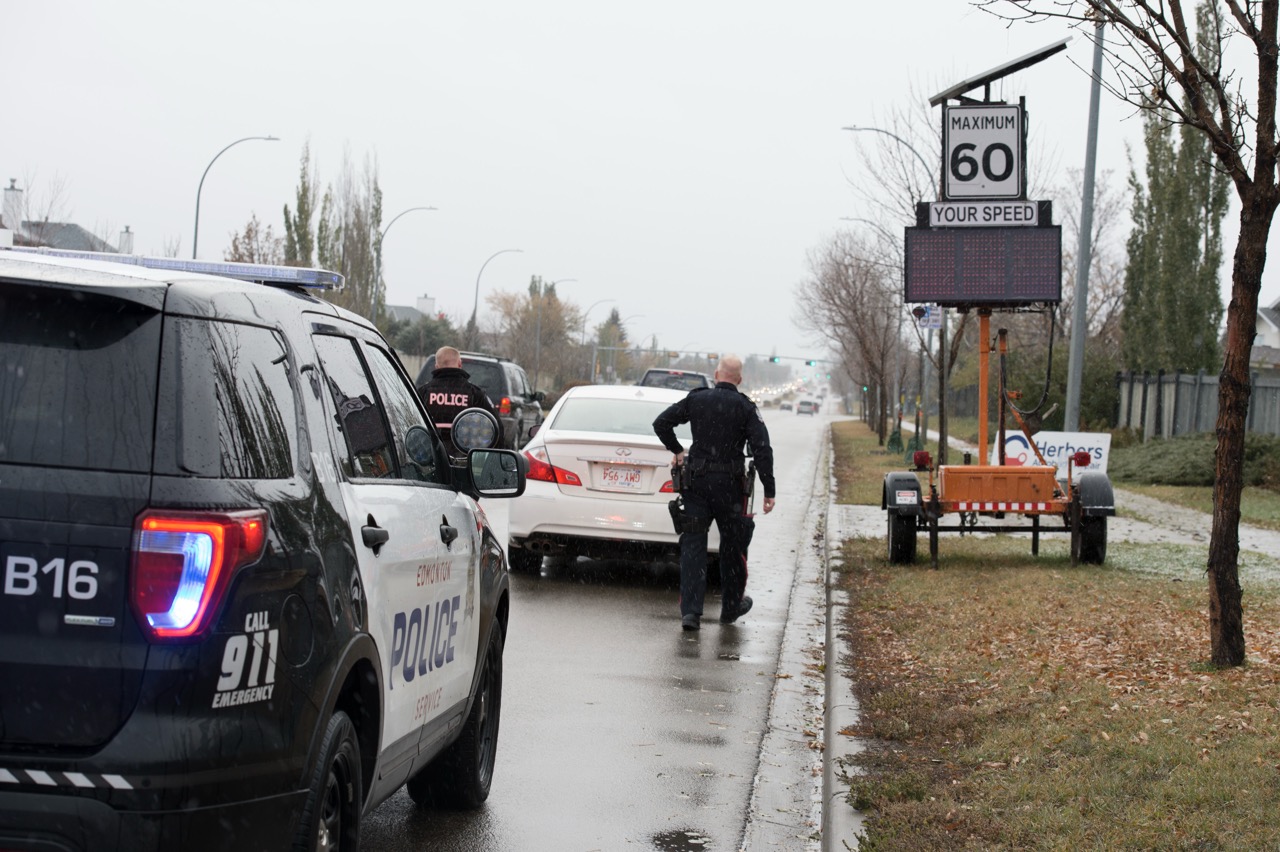
Speeding Charges Laid

24057
Impaired Driving Charges Laid

2233
Distracted Driving Charges Laid

3098
Traffic Awareness Sessions Provided to the Community

105
Commercial Vehicles Removed from Roads After Inspection

879
Engaging and Building Relationships with the Community
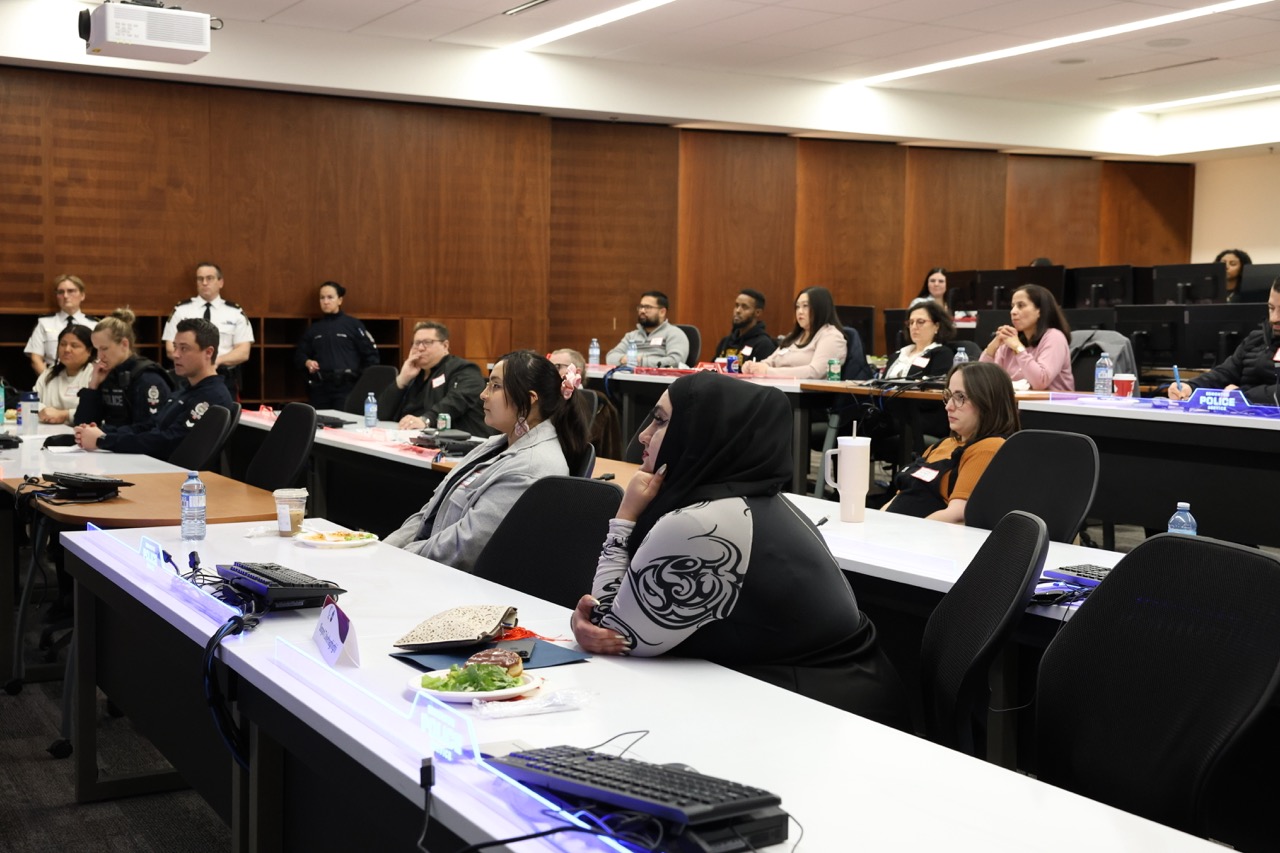



4
nîsohkamâkewin ADVISORY COUNCIL
Sessions Held

3
Chief’s Community Council
Sessions Held

4
SOGIE ADVISORY Council
Sessions Held

4
ELDERS COUNCIL
Sessions Held

145545959
Total Social Media
Impressions

101623266
Total Social Media
Engagements

200
COMMUNITY ENGAGEMENTS
BY COMMUNITY RELATIONS SECTION
10-Year Trend of Edmonton’s Crime Rate and Crime Severity Index
Total Crime Rate
The crime rate per 100,000 in Canada represents the number of crimes reported to the police for every 100,000 people. It is calculated by dividing the total number of reported crimes by the population and then multiplying the result by 100,000.
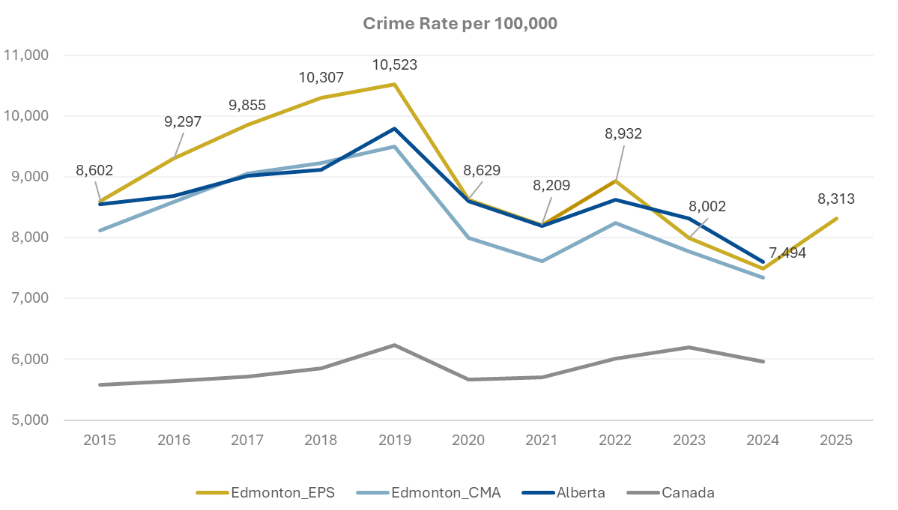
- In 2025, the overall crime rate increased following two years of decline. This rise was driven by non‑violent offences, such as shoplifting, theft from vehicles, and mischief.
- To address these trends, EPS implemented a range of initiatives in 2025 aimed at strengthening community safety. The Crime Reduction Plan was expanded to all six patrol branches, focusing on identifying violent crime hotspots and prolific offenders. Using this analysis, proactive policing strategies were developed in collaboration with communities and partner organizations.
- EPS also launched a new Traffic Safety Plan focused on improving road safety through increased enforcement, enhanced officer training, and a public awareness campaign.
Crime Severity Index (CSI)
The Crime Severity Index (CSI) in Canada measures not only how many crimes are reported to police, but also how serious those crimes are. Unlike the overall crime rate, which counts every offence equally, the CSI weighs each offense based on severity. More serious crimes, such as homicide or sexual assault, carry higher weights, while less severe offences, such as theft or vandalism, have lower weights.
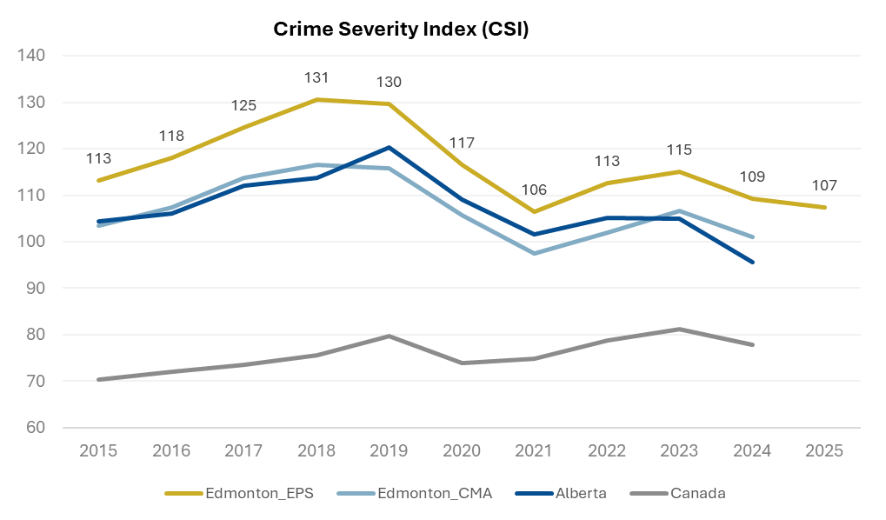
- In 2025, Edmonton’s CSI showed a slight decline. While there was a small increase in violent crime, this was offset by decreases in less severe non-violent offences, resulting in an overall downward trend in the index.
Source: EPS, Canadian Centre for Justice Statistics
Citizen Perception Survey – Feedback from Edmontonians
Each year, the Edmonton Police Service participates in an independent survey that measures how Edmontonians view policing in Edmonton. The following highlights key results from the 2025 survey.
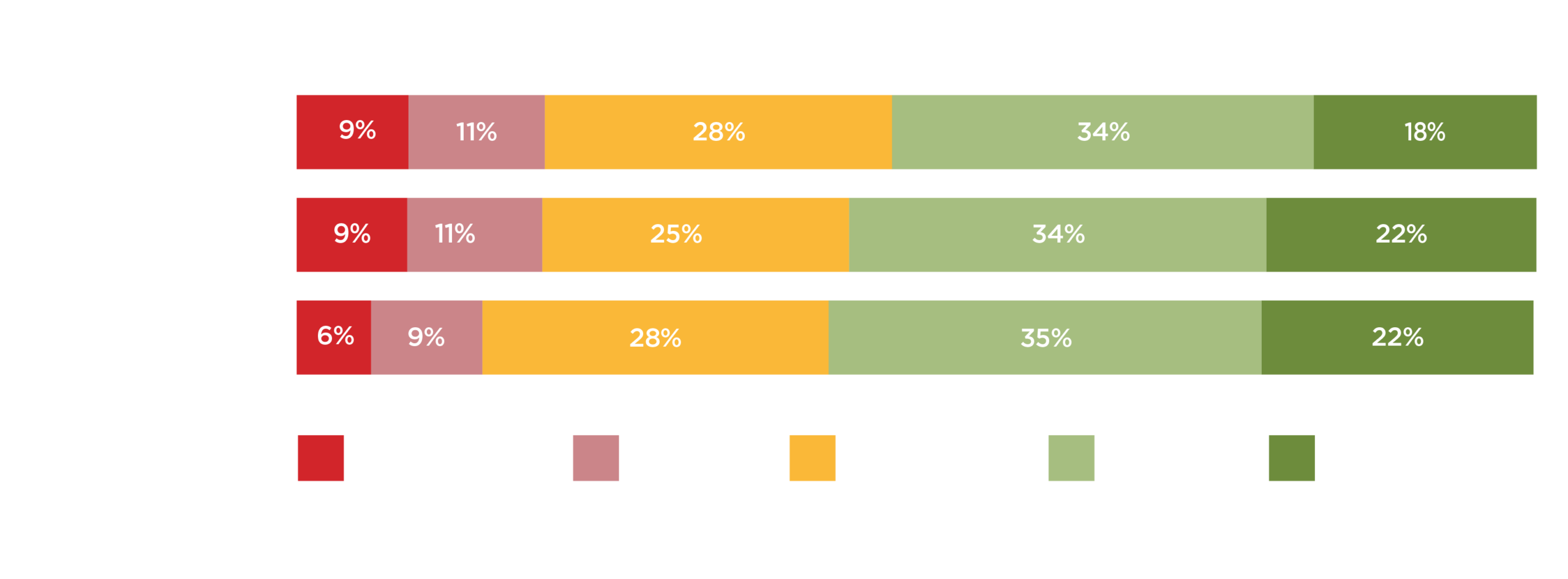
CONFIDENCE IN POLICE
Citizen perception on the overall job of police in their community.
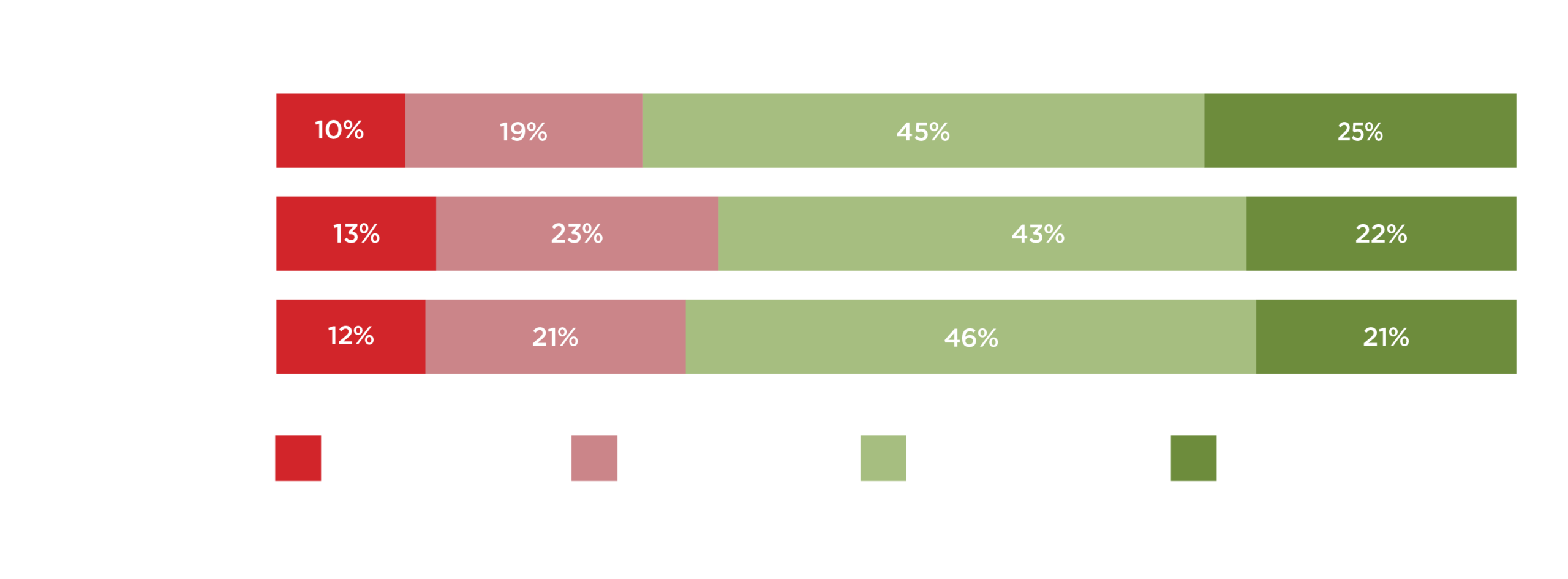
FEELINGS OF SAFETY
Citizen perception on how safe they feel when walking alone in their community after dark.
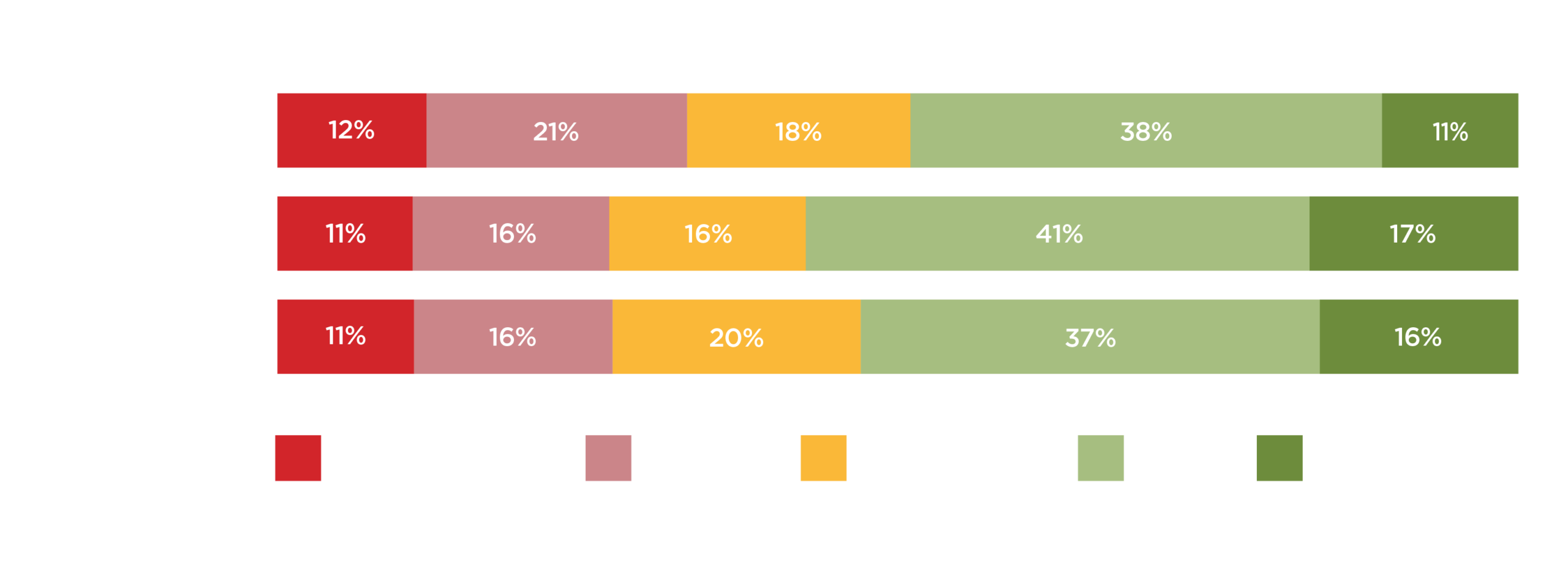
POLICE RESPONSE TIMES
Citizen perception of responding quickly to calls for assistance.
KEY HIGHLIGHTS:
- Overall Satisfaction: In 2025, 52% of Edmontonians reported being satisfied with the EPS. To strengthen public satisfaction, EPS continues to engage with citizens, invest in technology that collects real-time neighbourhood-level feedback, and enhance internal processes to act on the input provided.
- Perceptions of Safety: 70% felt safe in their communities after dark, an increase from 2024 (65%) and 2023 (67%). This marks the first significant improvement in perceived public safety since 2020.
- Confidence in police response: 49% of Edmontonians agreed that EPS responds quickly to calls for service, a slight decrease from previous years. Confidence in response times remains an important factor in building trust between residents and law enforcement.
WHAT ARE RESIDENTS SAYING?
Beyond the annual Citizen Perception Survey, EPS continues to gather year-round insights through ongoing research and regular community engagement. This includes the monthly Zencity survey, which provides timely information about public safety concerns, perceptions of safety, and overall satisfaction with police services.
In 2025, Zencity survey results showed meaningful improvements:
- Perceptions of safety increased from 56% to 65% among monthly respondents.
- The percentage of residents who felt that police provide the same quality of service to everyone rose from 46% to 53%.
These surveys offer valuable, real-time feedback that helps EPS respond more effectively to community needs.
WHAT RESIDENTS WANT EPS TO FOCUS ON
Across multiple engagement channels, Edmontonians consistently identified the following priorities:
- Reducing homeless encampments
- Addressing public drug use
- Improving traffic safety
- Reducing theft and break-ins
EPS Strategic Plan & Goals
The Edmonton Police Service’s (EPS) Strategic Plan is the organization’s priorities and direction over a multi-year period. It reflects input from a wide range of sources, including direction from the Edmonton Police Commission, ongoing engagement with community groups, consultations with government and other law enforcement agencies, collaborations with social service agencies and non-profits, and feedback from EPS employees.
The 2023-2026 Strategic Plan represents a shared vision for community safety in Edmonton. It ensures EPS aligns its work with the values and expectations of the people it serves by defining clear goals and outcomes for this period.
The Strategic Plan outlines five key goals, which together shape how EPS delivers policing services and strengthens public safety across the city.
2023-2026 Strategic Plan
 VISION: A forward-thinking police service that strengthens public trust
through addressing crime, harm, and disorder.
MISSION: To be relentless on crime and a leading partner in building community safety.
VALUES: Integrity | Accountability | Respect | Innovation | Courage | Community





Goal 1

Balance Support and Enforcement
What it means: EPS aims to understand the circumstances of each individual and ensure people are appropriately transitioned to systems that provide supports, or when necessary, enforcement measures. By balancing both approaches, EPS works to enhance safety while helping people access systems and services that address underlying needs.


EPS PERFORMANCE MEASURE RESULTS
| Indicators: | 2023 | 2024 | 2025 | CY vs LY |
|---|---|---|---|---|
| Violent Crime Rate | 1,457 | 1,429 | 1,431 | |
| Non-Violent Crime Rate | 6,589 | 6,482 | 6,948 | |
| Property Crime Rate | 4,406 | 4,332 | 4,930 | |
| Violent Crime Severity Index | 135.75 | 123.96 | 132.84 | |
| Non-violent Crime Severity Index | 105.91 | 107.30 | 98.16 | |
| Violent Crime Weighted Clearance Rate | 52.60% | 50.70% | 51.80% | |
| Non-violent Crime Weighted Clearance Rate | 26.30% | 25.60% | 27.90% | |
| Traffic Fatalities | 27 | 26 | 32 | |
| Traffic Fatality Rate per 100,000 Population | 2.4 | 2.2 | 2.6 | |
| Breaches – Violations | 19,640 | 19,673 | 19,709 | |
| Social Disorder Occurrences | 32,972 | 31,783 | 28,650 | |
| Domestic Violence Occurrences | 9,492 | 9,308 | 8,506 |
Source: EPS

| Measures: | 2023 | 2024 | 2025 | CY vs LY |
|---|---|---|---|---|
| Violent Crime Clearance Rate | 49.40% | 49.88% | 52.03% | |
| Non-Violent Crime Clearance Rate | 39.56% | 39.35% | 37.60% | |
| Referrals – Crime and Trauma-Informed Support Services | 2,099 | 2,367 | 2,495 | |
| Youth Diverted | 322 | 295 | 365 | |
| HELP Interactions with Community Members | 4,984 | 6,789 | 7,798 | |
| Dispatched Calls for Service – Public Generated | 165,024 | 167,254 | 170,040 | |
| Dispatched Calls for Service - Officer Generated | 21,020 | 28,192 | 33,810 | |
| Total Dispatched Calls for Service | 186,044 | 195,446 | 203,850 | |
| Referrals – Police and Crisis Team (PACT) | 5,916 | 5,556 | 8,314 | |
| Proactive Police Time | 19.6% | 21.1% | 22.7% | |
| Percentage of Public Interactions where Use of Force was Applied | 0.53% | 0.51% | 0.47% | |
| Traffic Warnings and Tickets Issued | 64,433 | 74,178 | 89,799 |
Source: EPS
Note: For Call Response Time, please refer to Appendix C
WHAT THIS TELLS US
Traffic Safety
- In 2025, Edmonton experienced an increase in traffic fatalities. This rise was largely driven by more vehicle–pedestrian collisions and a notable increase in motorcycle‑involved deaths. Speeding, impaired driving, and other high‑risk driving behaviours also contributed to this trend.
- Through the EPS Traffic Safety Plan, EPS continues to collaborate with the City of Edmonton by sharing traffic fatality trends with the City’s Safe Mobility team. This team leads Vision Zero initiatives, including roadway engineering improvements, enforcement strategies, public education campaigns, and pedestrian safety measures. EPS supports this work with targeted enforcement such as impaired driving operations, speed enforcement, and focused traffic safety initiatives throughout the year.
Domestic Violence
- Over the past three years, Edmonton has seen a gradual decrease in domestic violence occurrences. However, the number of charges laid during the same period has continued to increase. The EPS Domestic Violence Plan emphasizes a victim-centered approach, integrated support systems, and data-driven offender management.
- Reducing domestic violence requires coordinated, long-term support across multiple sectors. Community partners and other levels of government play a critical role in providing counselling, housing, financial assistance, and legal aid.
Calls for Service
- Dispatched calls for service have increased steadily over the past three years. While some of this growth reflects Edmonton’s growing population, most of the increase in 2025 came from officer‑generated calls. Public‑generated calls for service increased by 1.7%, whereas officer‑generated calls rose by 19.9% compared to the previous year. This suggests that EPS officers are identifying and addressing potential issues more often before they escalate or are reported by the public.
Crime and Trauma-Informed Support Services
- In 2025, Crime and Trauma-Informed Support Services (CTSS) supported more clients than in previous years. This increase was driven by internal engagement efforts, including presentations to 60 patrol squads that improved awareness and referral processes. With enhanced referral processes and proactive file review and assignment, the team was able to identify suitable cases earlier, resulting in higher overall service volume.
Police and Crisis Team (PACT)
- Referrals to the Police and Crisis Team (PACT) increased in 2025 due to expanded capacity funded through funding from the Government of Alberta’s Urban Strategies Grant. This funding enabled EPS and Recovery Alberta to add more mental health clinicians to support PACT, providing seven day a week coverage across all six patrol branches. With more clinicians working alongside frontline officers, PACT was able to respond to more mental health-related calls for service, resulting in an overall increase in referrals.
Use of Force
- Over the past three years, public interactions involving a use of force option have remained consistently below 1%, with a moderate decrease since 2023. While some high‑risk or crisis situations require the use of force to ensure safety, EPS continues to prioritize de‑escalation and enhanced training to minimize these instances whenever possible.
KEY HIGHLIGHTS
STRENGTHENING OUR RESPONSE TO GANGS AND ORGANIZED CRIME
The EPS Organized Crime Branch (OCB) has launched a new Intelligence Hub to strengthen how the service identifies and responds to gang and organized crime activity. The hub brings together officers, analysts, and civilian experts to coordinate intelligence and support investigations across the organization and with regional partners.
To further enhance frontline awareness, OCB introduced the Gang Response and Intelligence Program (GRIP). GRIP provides a direct channel for timely, actionable intelligence and ensures every patrol squad has a designated representative to share information, support proactive work, and focus on individuals or groups driving violence in their areas.
Together, the Intelligence Hub and GRIP create a more coordinated, informed, and effective approach to reducing gang-related harm in Edmonton.

CHARGES LAID IN SAMUEL BIRD INVESTIGATION
After months of dedicated investigative work, the EPS Homicide Section laid second degree murder charges in connection with the disappearance of 14-year-old Samuel Bird. The milestone reflects unwavering commitment and professionalism of the members involved in the case.
From the moment Samuel was reported missing in June, investigators worked tirelessly, under significant public attention. They devoted thousands of hours to interviewing witnesses, analyzing evidence, and following leads, all while navigating misinformation and false tips circulating on social media. Despite these challenges, the investigative team remained focused, methodical, and determined to uncover the truth.
Critical to the progress of the investigation were the strong relationships built with Samuel’s family, his community, and the Confederacy of Treaty No. 6 First Nations. Their collaboration and support were essential to the investigative process and reflected the EPS’ commitment to respectful, inclusive, and community-centred policing.
The strategies employed by the investigators ultimately led to the arrest, the laying of charges, and the discovery of Samuel’s remains; an important development that will help bring clarity and justice as the case proceeds through the courts. The outcome is a result of exceptional teamwork, compassion, and perseverance, and the EPS extends its gratitude to everyone who contributed to bringing Samuel home.

WE’RE “DEAD SERIOUS” ABOUT TRAFFIC SAFETY
The EPS launched the Dead Serious public safety campaign to address growing concerns about speeding, impaired driving, street racing and distracted driving – key factors in serious and fatal collisions.
Within the first six weeks, the campaign generated more than five million impressions on social media, demonstrating strong public engagement. A major focus is young men, a demographic disproportionately involved in severe collisions. Through targeted messaging, the campaign challenges risky behaviours and promotes safer decision-making behind the wheel.
The Dead Serious YEG website reinforces the campaign’s central message: the EPS is “dead serious about traffic safety, are you?” By broadening the conversation online, the campaign reaches a broader audience and encourages ongoing reflection and behaviour change.
The Dead Serious campaign continues into 2026 as part of EPS’s continuing efforts to reduce traffic-related injuries and fatalities and promote safer roads for all Edmontonians.

Police seize more than 60,000 opium poppy plants from northeast Edmonton property
In July 2025, the Edmonton Drug and Gang Enforcement (EDGE) Section executed a search warrant at a property near 34 Street and 195 Avenue NW, uncovering approximately 60,000 opium poppy plants growing in the field. With an estimated value between $160,000 to $500,000, the discovery represents a significant seizure and an uncommon find in Canada.
Over the two-day investigation, officers also located additional poppy seeds and doda power, produced by grinding opium poppy pods and used to make a tea with analgesic effects that can be highly addictive.
“An opium grow of this size is rarely encountered in Canada and even though there were no indicia of further processing, due to the volume of plants, it was likely being grown to be sold on the illicit market,” says Acting Inspector Marco Antonio of the EDGE Section. “Any opioid drug consumed outside the direction of a doctor or when illicitly produced, can pose significant health risks to the consumer, leading to severe addiction and harm to the community.”
EDGE arrested and charged four people in connection with this investigation, taking an important step in disrupting the illegal drug trade and reducing associated harms in Edmonton.

PROJECT GHOSTRIDER: DISRUPTING ORGANIZED CRIME BEFORE IT TAKES HOLD
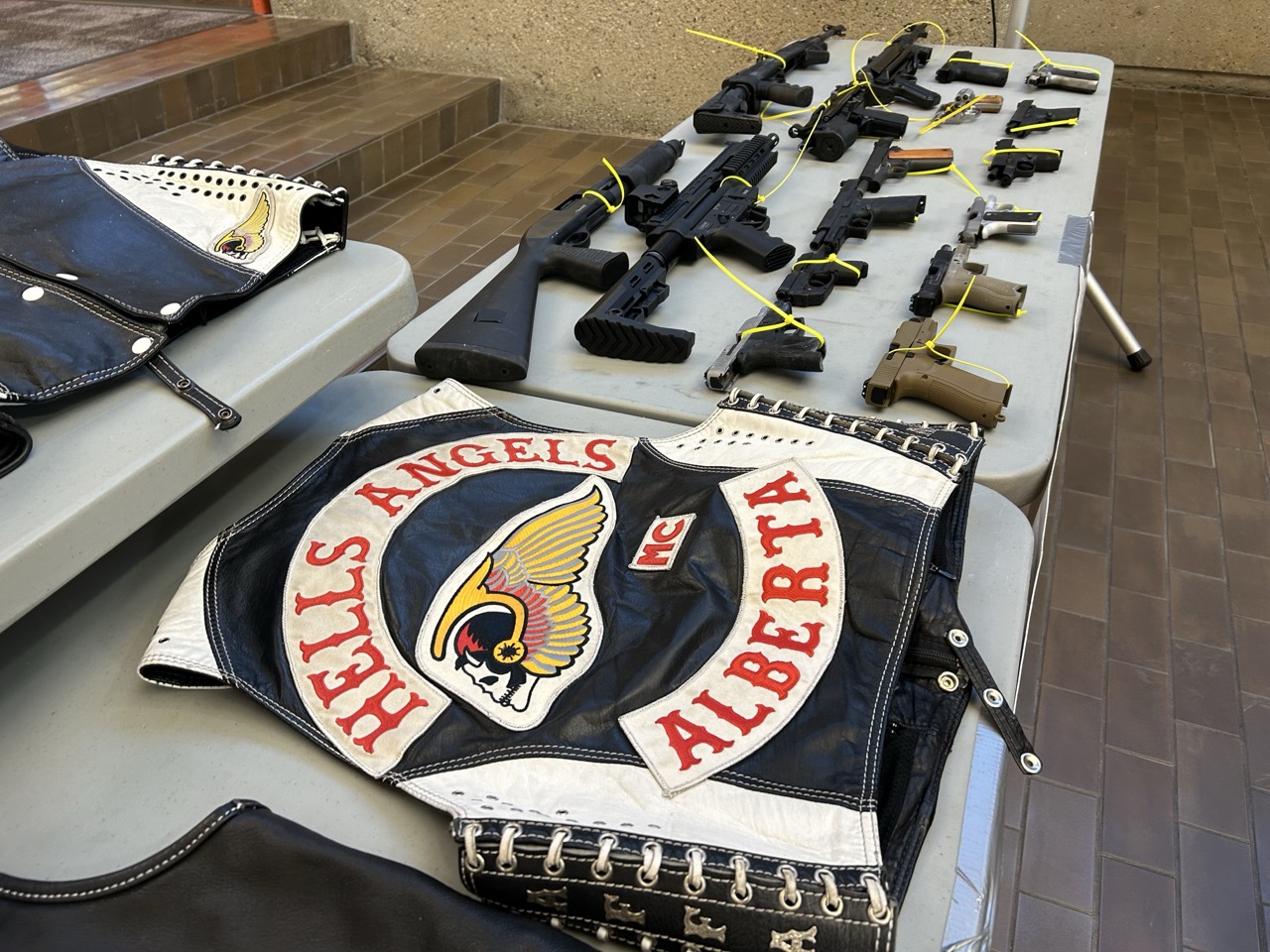
In September 2025, the EPS Drug and Gang Enforcement Section (EDGE) concluded Project Ghostrider, an 11-month investigation that prevented the One Order Motorcycle club (MC) from establishing a presence in Edmonton. Working closely with the RCMP Federal Policing Northwest Region, investigators arrested more than 20 individuals linked to the group and uncovered criminal activity ranging from firearms trafficking to extortions and assaults.
The One Order MC, already active in Eastern Canada, and aligned with the Hells Angels, had been identified as a one-percent outlaw organization with ties to violence. Through Project Ghostrider, officers seized dozens of firearms, thousands of rounds of ammunition, and significant quantities of drugs, preventing these items from reaching Edmonton streets.

The success of this project reflects the strength of the EPS Guns and Gangs strategy, introduced in 2019, which emphasizes intelligence-led policing and strong partnerships to disrupt organized times.
“It takes months of time and effort by our investigators to successfully conclude a file of this magnitude,” says Inspector Darrin Gordon of the EPS Organized Crime Branch. “I am extremely proud of our talented members who work tirelessly to address the impact of organized crime in Edmonton”.
PROJECT GASLIGHT AND SOUTH ASIAN EXTORTIONS
Project Gaslight was one of the most complex investigations in EPS history, targeting an organized extortion scheme directed primarily at South Asian homebuilders in 2023 and 2024. Led by the Edmonton Drug and Gang Enforcement Section (EDGE), the investigation involved close collaboration with the RCMP National Coordination and Support Team and other international agencies. It concluded in 2024 with six arrests and Canada-wide warrants issued for the extortion scheme’s leader.
The work did not end there. On September 20, 2025, another suspect connected to Project Gaslight was arrested at the Edmonton International Airport after returning from India, where he had fled. He was charged with five firearms-related offences linked to three shootings that took place in late 2023 in Edmonton, Winnipeg and Sherwood Park.
Later in 2025, police noted a small resurgence in reports of threats of violence against the South Asian community. Drawing on lessons learned from Project Gaslight, investigators acted quickly to assess the new threats and strengthen outreach. In July of 2025, the EPS hosted a public town hall to share information, hear concerns, and encourage those affected by extortion attempts to come forward as an essential step in effective investigations.
This proactive and collaborative approach helped prevent another extortion crisis and reinforced the EPS’ commitment to protecting vulnerable communities and responding swiftly to emerging threats.

Goal 2

Partner and Advocate
What it means: EPS uses knowledge, expertise, and front-line insights to help build strong, effective partnerships that enhance community safety. By working closely with community organizations, government partners, and service providers, EPS helps identify shared priorities, advocate for evidence-based approaches, and support coordinated efforts that address the root causes of crime and disorder.


EPS Performance Measure Results
| Measures | 2023 | 2024 | 2025 | CY vs LY |
|---|---|---|---|---|
| Research Partnerships & Agreements | 3 | 13 | 14 | |
| Social workers contributed by partners to assist frontline members (monthly average) |
10 | 15 | 15 |
Source: EPS
WHAT THIS TELLS US
Strengthening research and evidence-based policing
- In 2025, EPS continued to advance its research capacity, participating in 14 applied studies that supported a stronger evidence-based approach to policing. To share knowledge across the organization, EPS hosted a series of internal learning sessions featuring academic experts and policing researchers. Their findings were integrated into EPS initiatives focused on member wellness, police tactics and training, risk assessment, crime reduction, and equity, diversity, and inclusion. This ongoing collaboration ensures that EPS policies and practices are informed by the latest research and real-world insights.
Sustained Collaboration with Social Service Partners
- The number of social workers contributed by partner agencies has remained consistent since 2024. In 2025, this included twelve branch navigators, two branch team leads, and one navigator supporting the White Avenue Beats team. These embedded roles strengthen EPS’ ability to connect individuals with appropriate community supports and reinforce collaborative approaches to addressing social and safety challenges.

KEY HIGHLIGHTS
PROJECT UNIFY: MAKING TRANSIT SAFER
In March 2025, the EPS Transit and Community Safety (TRACS) teams partnered with City of Edmonton Transit Peace Officers (TPO) to launch Project Unify, an EPS-led initiative designed to enhance safety across the LRT system through proactive, high-visibility policing. This project focuses on preventing, intervening, and suppressing crime and disorder in transit spaces.
Using intelligence from the EPS Transit Dashboard and data from the City of Edmonton, deployments were concentrated on stations with high-ridership and elevated reports of violent crime and disorder. The targeted approach ensured resources were directed to where they were needed most.
After the first 180 days, Project Unify showed a significant increase in officer-generated occurrences (+231%) and a drop in public-generated occurrences (-11%).
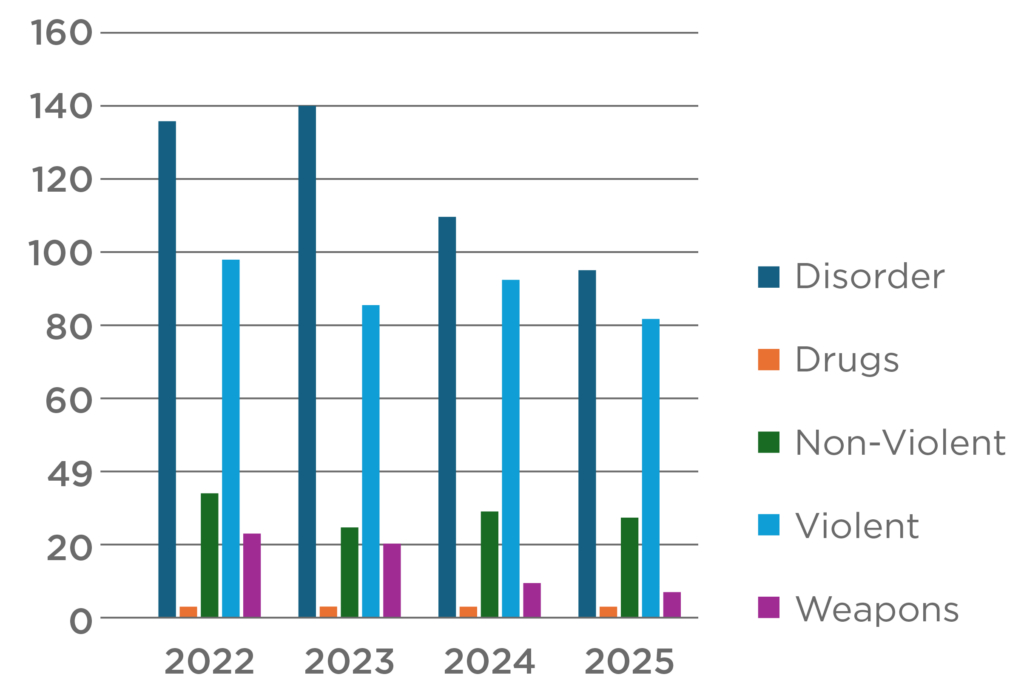
Public Generated Occurrences March 19-September19 of 2022-2025. *Occurrences where the “Final Event Group” is “Other” or “Traffic” have been removed.
Only during Unify deployments at Bay Enterprise Square, Belvedere, Central, Churchill, Churchill LRT Above Ground, Clareview, Coliseum, Corona, Government Centre Station, Government Centre Transit Center, Jasper Place, Kingsway, MacEwan, Northgate, Southgate, Stadium, and University LRT stations on designated days and times.
During the deployment of Project Unify teams, there was also a decline in the most common types of complaint calls, especially weapons (-70%).

Staff Sergeant Patrick Stevens EPS Crime Suppression Branch

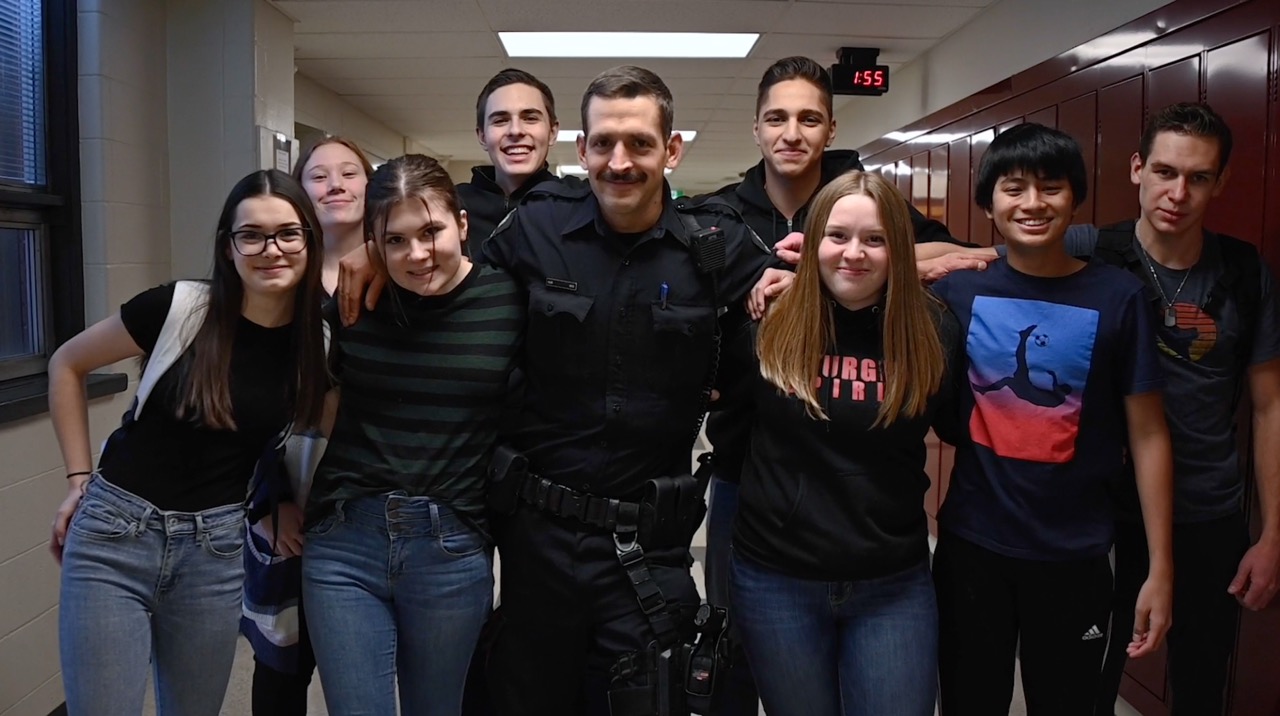
INTERNATIONALLY RECOGNIZED SRO PROGRAM RETURNS TO PUBLIC SCHOOLS
In May 2024, the Edmonton Public School Board (EPSB) voted to reinstate the School Resource Officers (SRO) program, which had been suspended in 2020. The EPS began Phase 1 of the program’s return in February 2025 by assigning six new SROs to public schools, with additional schools to follow as the rollout continues.
All SROs completed joint training between the EPSB and EPS, followed by specialized instruction in trauma-informed, inclusivity, neurodivergence, and Violent Threat Risk Assessment. The training ensures officers are equipped to support students in a safe, respectful, and developmentally informed way.
SROs play an active role in building strong relationships within school communities. Many volunteer their time before and after school, coach teams, lead clubs, and support extracurricular activities to help create trusted, positive connections with students. They also work closely with administrators, support staff, and mental health professionals as part of a multidisciplinary team focused on fostering a secure and supportive learning environment.
Close collaboration with EPSB has enabled the proven benefits of SROs to be expanded to public schools, improving safety and well-being while reducing calls for service.
The EPS SRO Unit also received international recognition from the National Association of School Resource Officers (NASRO) earning the 2025 International Exemplary Agency Award. Sergeant Matthew LeBlanc accepted the award, and Constable Mercedes Vankoughnett was named SRO of the Year. The honour, considered the gold standard in school-based policing, reflects the dedication, compassion, and collaborative spirit of the SROs who make a difference in students’ lives every day.

Staff Sergeant Paul Looker Youth Integrated Services Section
COORDINATING LAW ENFORCEMENT TO FIGHT FENTANYL
In 2025, the Government of Alberta strengthened its approach to addressing social disorder linked to the fentanyl crisis by enhancing coordination between community peace officers and local police, including the EPS. This province-wide effort aims to create a more unified and effective response to the harms associated with illicit drug use.
More than 800 community peace officers from 34 large- and mid-sized municipalities worked alongside local police to support coordinated operations targeting social disorders connected to fentanyl and other illicit drug substances.
The province’s goal is to build a cohesive law‑enforcement strategy that strengthens public safety, deters criminal activity, and supports safer communities. By aligning efforts across all levels of government and law enforcement, Alberta is working toward a more effective and coordinated response to fentanyl-related crime and disorder.

EPS TAKES FIRST PLACE IN SIRENS FOR LIFE
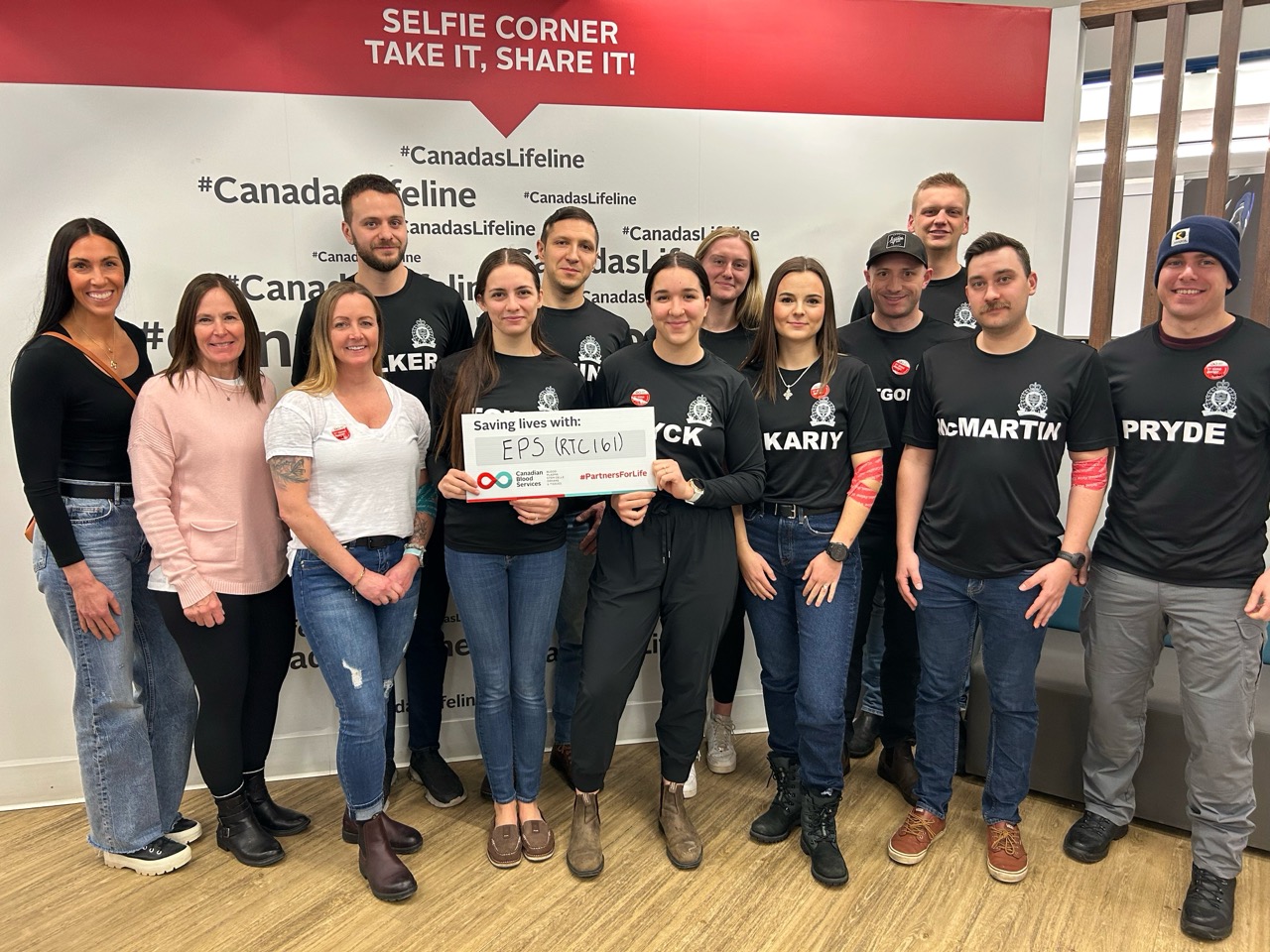
Several EPS employees rolled up their sleeves to donate blood again this year for the annual Sirens for Life campaign, a friendly competition among Edmonton-area first responders to see which agency can donate the most blood, while raising awareness about the importance of stem cell, organ, and tissue donations.
In 2025, results are in, and EPS placed first among participating agencies, contributing 74 units of blood, plasma, and platelet.
“It was incredible to see and hear about the many EPS employees who made time to roll up their sleeves and give back to their community,” said Chief Warren Driechel. “The fact that EPS led with the most blood donations locally is pretty incredible too and also speaks to the type of people who work for EPS.”
EPS is proud to support Sirens for Life each year and remains committed to helping save lives through continued participation and community leadership.
ZEBRA CHILD & YOUTH ADVOCACY CENTRE OPENS ITS DOORS
One year after announcing plans for a new Zebra Child & Youth Advocacy Centre, the doors to the expanded facility are officially open. The new 30,000 square foot building is designed to provide a safe, welcoming, and child-centre environment for young people who have experienced abuse or trauma.
The space includes 15 child-friendly meeting rooms, six additional child-friendly rooms, a sacred wellness room for ceremony, a toy room, green space, and expanded capacity for partners like EPS. The features support a more integrated, trauma-informed approach to helping children and youth through some of the most difficult moments of their lives.
The new centre strengths collaboration between police, social workers, medical professionals, and community partners, ensuring young people receive coordinated care in a single, supportive location.
More information about the new facility and its services are available on the Zebra Centre website.

MENTAL HEALTH CLINICIANS: A COLLABORATIVE RESPONSE
In June 2024, EPS and Recovery Alberta deepened their partnership to address a sharp rise in mental health related calls for service. Together, they launched the Divisional Support Mental Health Clinician program, which began operating across all six branches.
This collaborative model ensures individuals in crisis receive the right support at the right time. Clinicians work seven days a week and have access to the same tools and information systems used by Access 24/7 and the Police and Crisis Team (PACT). Their role is to assess individuals in crises, identify appropriate supports, and support frontline officers with specialized mental health expertise.
Patrol members can consult the PACT line at any time, ensuring continuous access to clinical expertise. When needed, clinicians attend scenes directly, providing real-time assessments that enhance safety and ensure individuals receive timely, informed care.
Through this partnership, EPS and Recovery Alberta are building a more responsive, integrated, and compassionate system of care, one that strengthens public safety while ensuring individuals in crisis are connected to the support they need.

Tanya Anderson Access 24/7

INTEGRATED DOMESTIC VIOLENCE RESPONSE TEAM
A new pilot project was launched to deliver urgent, coordinated support for survivors of intimate partner violence (IPV).
Since its implementation in March 2025, The Integrated Domestic Violence Response Team (IDVRT) is a community driven initiative designed to reduce dangerous service gaps and build a faster, more connected system of care.
Each year, Edmonton sees between 300 and 1,000 high risk IPV cases, and the EPS responds to approximately 25 IPV related calls a day, making timely, connected support essential.
Under this model, registered social workers work directly with the EPS Domestic Offender Crimes Section (DOCS), operating from both police and community agency locations. This partnership ensures survivors receive immediate, wraparound assistance without navigating the system alone.
Since its implementation, the IDVRT program has focused on four key goals:
- Deliver fast, coordinated help to high‑risk IPV victims, improving safety outcomes, reducing repeat violence, and decreasing emergency service calls.
- Support survivors through legal, health, and social systems, making it easier to access the right services at the right time.
- Use a secure information‑sharing platform, so survivors do not have to repeatedly retell their story as they navigate multiple agencies.
- Apply research‑backed approaches in trauma‑informed care, risk assessment, and case management to build a model that works and can be replicated in other communities, supported by ongoing reporting and evaluation.
IDVRT strengthens agency coordination and delivers holistic, survivor centred support, helping create a more responsive and effective system for those experiencing intimate partner violence.

PROTECTING EDMONTONIANS FROM FRAUD THROUGH COMMUNITY PARTNERSHIP
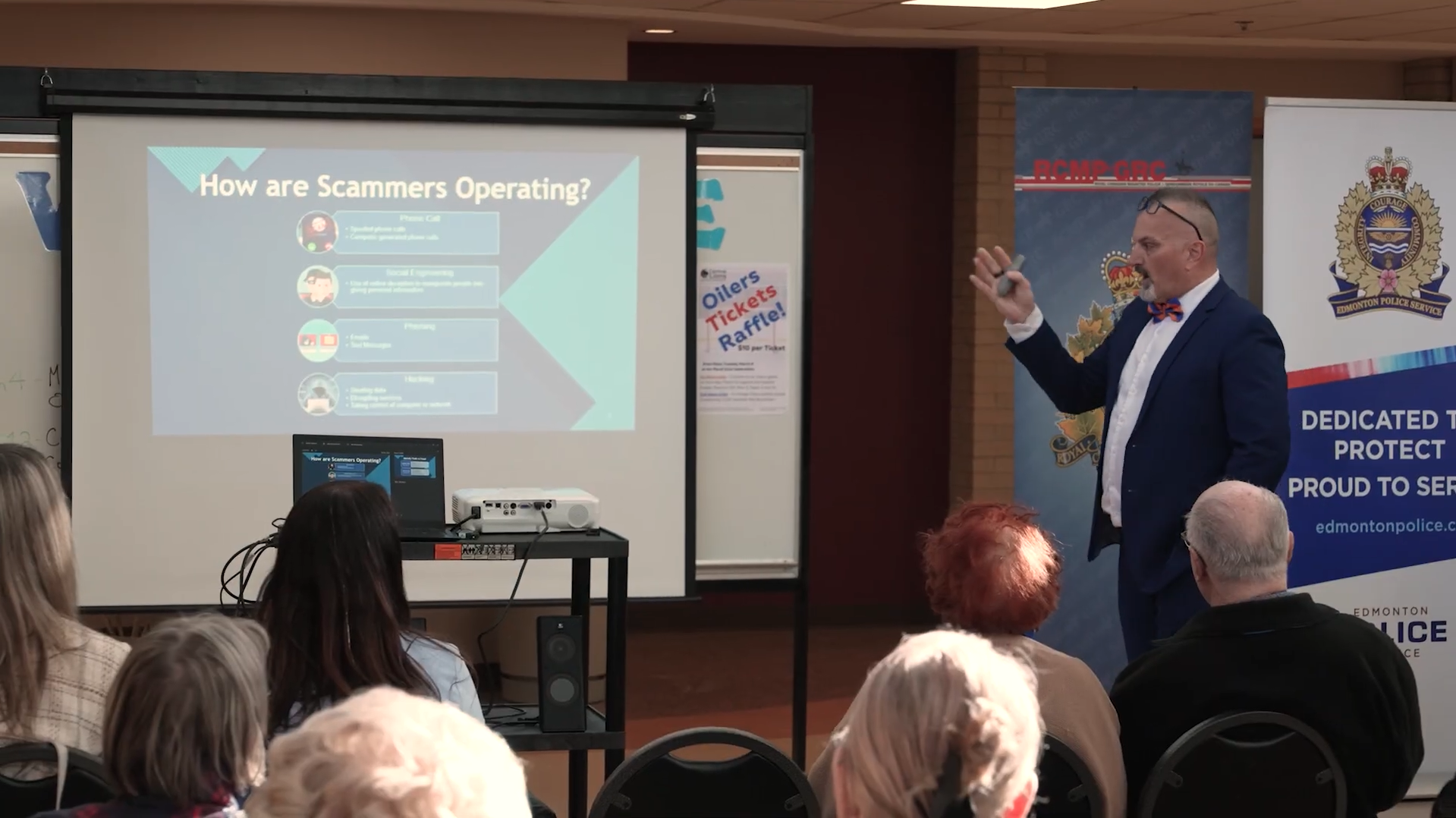
EPS joined provincial partners throughout Fraud Prevention Month to raise awareness about financial crime and help residents protect themselves from scams. The need for awareness is significant. In 2024, more than 5,000 frauds were reported in Edmonton, with losses exceeding $48 million. Investment scams caused the greatest financial harm, followed by compromised credit or debit accounts, identity theft, and phone scams. Investigators believe the true number of victims is even higher, as many incidents go unreported.
“Technology is a wonderful thing. It makes life a little easier for all of us, but with that technology comes a higher risk. The scammers also have the ability to use that technology against us,” said Detective Scott Abbott with the EPS Financial Crimes Unit.
EPS, in collaboration with community partners, hosted a kickoff event at the Central Lions Seniors Centre to mark the launch of Fraud Prevention Month. Throughout March, partners shared educational content through social media, outreach campaigns, and public resources to raise awareness of the most prevalent types of fraud.
To further expand public awareness, the Financial Crimes Unit launched The Conjob podcast, an accessible way for the public to learn about emerging fraud trends and how criminals exploit technology. The initiative adds to the growing suite of tools aimed at reducing victimization and helping Edmontonians protect themselves from financial crime.
CONSTABLE MATHEW BRUNO AWARDED DEMPSEY SERVICE AWARD
Constable Mathew Bruno has been named the latest recipient of the Dempsey Service Award, an honour that recognizes exceptional service, compassion, and dedication to the community. His nomination described him as, “the kind of police officer that young people think cops should be, and adults are thankful to have,” a sentiment echoed by his entire squad, colleagues across multiple units, and several external partners who jointly put his name forward.
Over the past several years, Constable Bruno has worked closely with Edmonton’s most vulnerable communities through his roles in Disruption, Healthy Streets Operation Centre (HSOC), and now the Encampment Response Team. What set him apart was not only his commitment to his duties, but his drive to build a community movement that made a meaningful difference.
What began as a small fundraising effort in 2023 grew into Leave No Kid Behind, a year-round initiative that mobilized colleagues and community partners to deliver more than $11,000 in gifts to over 250 children and families by December 2024. His efforts brought joy, dignity, and connection to families who needed it most.
“I personally observed sincere gratitude in the expression on their faces and the tears in their eyes,” said one supervisor. “And despite all of this, Constable Bruno remained focused solely on the cause — never on personal recognition.”
Constable Bruno’s work is a powerful reminder of what service looks like at its best; quiet, steady, and deeply human. His impact is undeniable. Congratulations and thank you for all that you do.

BODY WORN VIDEO REDACTION PARTNERSHIP WINS CACP AWARD
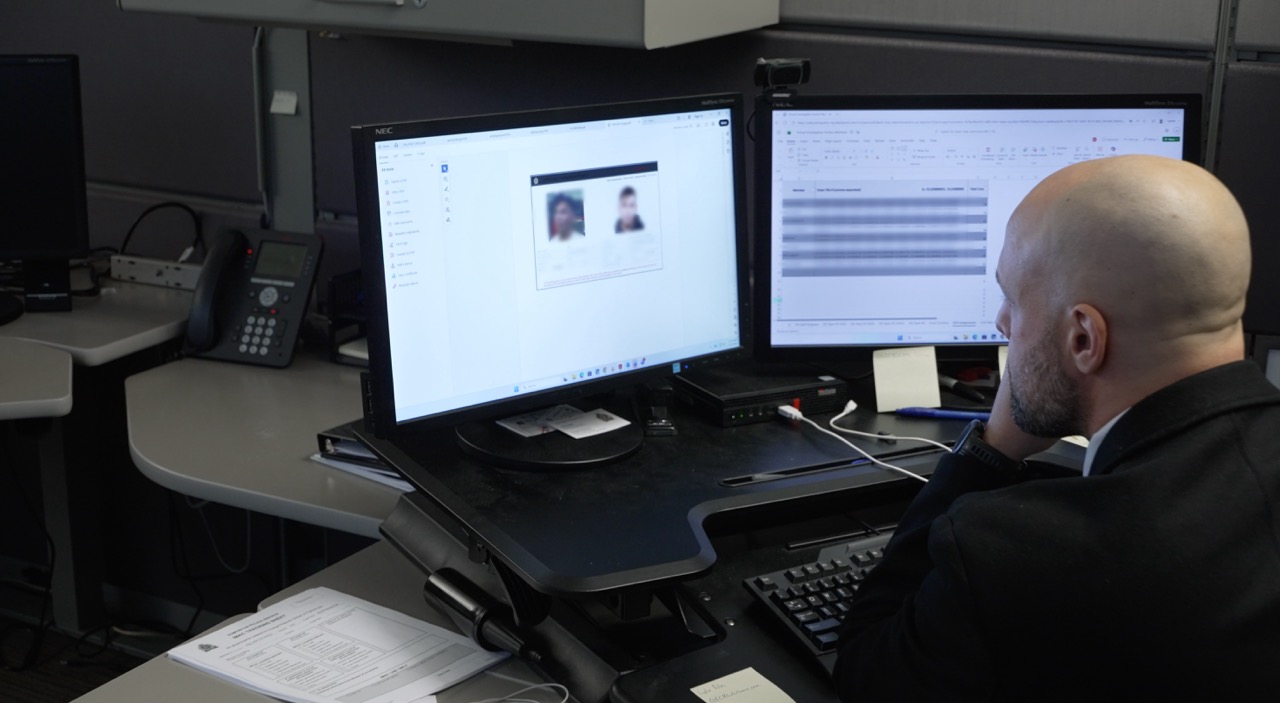
The Canadian Association of Chiefs of Police (CACP) presented the CACP/Axon Equity, Diversity and Inclusion Leadership Award to Chief Innovation & Technology Officer Ron Anderson and Superintendent Derek McIntyre of the EPS for their leadership in the implementation of the Body Worn Video Redaction Partnership with Technology North. This award recognizes excellence, dedication, and initiative to enhance community trust and create a corporate culture that is fair, supportive, and inclusive.
In June 2024, EPS partnered with Edmonton-based IT company Technology North (Tech North) to launch a research development project focused on the redaction of body worn camera footage in low complexity incidents. The project employed four Tech North’s staff members, all of whom are on the autism spectrum, through the company’s autism employment program.
The pilot was a resounding success. Testing confirmed that Tech North’s neurodivergent employees completed the redaction work with the same speed and accuracy as neurotypical members of the Digital Evidence and Record Management Team. As a result, EPS formalized a service agreement, making Tech North’s autism employment program a permanent part of its digital evidence workflow.
As body-worn cameras continue to be deployed across the police service, the volume of footage requiring redaction will grow significantly. The partnership with Tech North ensures EPS can meet this demand while advancing meaningful employment opportunities and demonstrating the value of inclusive innovation.

Goal 3

Connect, Share and Evolve
What it means: As Edmonton and the world continues to change, EPS is committed to listening, learning, and evolving alongside the community. This goal focuses on strengthening our connections by sharing more about policing, the work EPS does, and the people behind the uniform. By increasing transparency and humanizing its members, EPS aims to build deeper understanding, foster trust, and support meaningful relationships with Edmontonians.


EPS Performance Measure Results
| Indicators: | 2023 | 2024 | 2025 | CY vs LY |
|---|---|---|---|---|
| Number of Public Complaints | 1,132 | 1,072 | 1,031 | |
| Public Complaints Substantiated | 105 | 95 | 80 | |
| Rate of Complaints per 10,000 Dispatched Calls | 61 | 55 | 51 | |
| Online Reports Received | 18,591 | 18,206 | 23,406 | |
| Total Visits to EPS Website | 6,502,962 | 5,559,028 | 6,474,991 | |
| Total Visits to EPS Community Safety Data Portal | 61,965 | 52,450 |
Source: EPS
| Measures: | 2023 | 2024 | 2025 | CY vs LY |
|---|---|---|---|---|
| Language Support Services | 474 | 1,064 | 1,645 | |
| Events Attended with Marginalized Communities | 20 | 31 | ||
| Events Planned for Marginalized Communities | 5 | 12 | ||
| Total Social Media Engagements | 5,849,873 | 6,252,214 | 10,162,326 | |
| Social Media Engagement Rate | 9.90% | 9.90% | 7.00% | |
| Number of News Releases | 400 | 397 | 424 |
Source: EPS
WHAT THIS TELLS US
Declining Public Complaints
- Public complaints about EPS have continued to decline since 2023, and the number of substantiated complaints, those considered valid under the provincial legislation, has also decreased. This positive trend, occurring even as Edmonton’s population grows, may reflect stronger community relationships, enhanced de‑escalation training, greater transparency, and stronger accountability measures. Together, these efforts support greater public trust.
Improved Language Support Services
- In 2025, EPS expanded access to Language Support Services. Enhancements included faster direct access to interpreters, broader availability of the live interpreter app, and clearer guidance for frontline staff.
Stronger engagement with marginalized communities
- EPS deepened its engagement with marginalized communities in 2025. The Community Relations Section increased both the number of events hosted and attended compared to the previous year, helping build stronger connections and more meaningful dialogue with diverse groups across the city.
Social media engagement trends
- Total social media engagements increased significantly in 2025, driven by strong overall impressions and several months of high‑interest content that generated increased reactions, comments, shares, and link clicks. At the same time, the overall engagement rate declined due to changes in how some social media platforms report data. These changes reduced the availability of engagement information, particularly with the removal of interaction data for posts older than 90 days and introduced new limits on how frequently engagement metrics are updated.

KEY HIGHLIGHTS
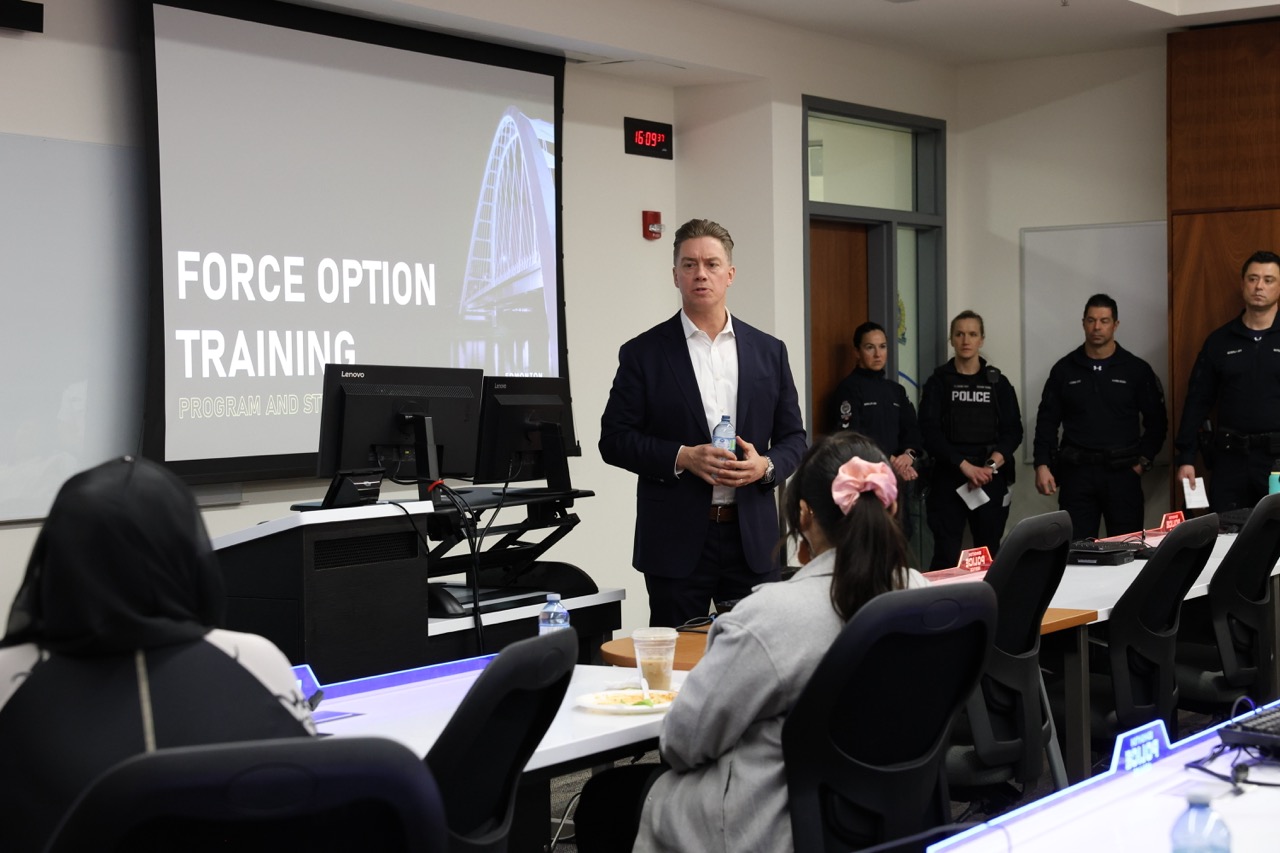
EPS PARTNERS GET AN INSIDE LOOK AT CONTROL TACTICS
In February of 2025, members of the Chief’s Community Councils (CCC) were invited behind the scenes for a firsthand look at the control tactics used by EPS. The CCC brings together citizens from diverse backgrounds and sectors, and the session offered a rare opportunity to experience policing from an officer’s perspective. The goal was to build understanding, context, and transparency around the realities of frontline policing.
“We want to expose them to some information about what our members would be facing. But the bigger piece is to educate them on our processes: What are we doing? The research behind it. The science behind it,” said Staff Sgt. Joe Tassone.
The event began with an information session, outlining the principles behind EPS control tactics and the complex decision making required in dynamic situations. Participants then received a brief orientation before entering a series of scenario-based exercises. They were provided only the essential details officers typically receive before responding to a call, mirroring the uncertainty and rapid assessment required in real-world policing.
Sessions like this strengthen community understanding of police work and foster meaningful dialogue, key elements in building trust and shared responsibility of public safety.

EPS ROLLS OUT RED CARPET FOR BLACK HISTORY MONTH SHOWCASE
The sound of a steelpan drum and the smell of jerk chicken greeted guests at EPS headquarters for the fourth annual Black History Month Showcase, an event celebrating rich history, culture, and contributions of Black Canadians. The showcase brought together music, food, and community, transforming EPS Police Headquarters into a vibrant space of connection and celebration.
Hosted in partnership with community members and cultural performers, the event highlighted the diversity within Edmonton’s Black communities and created opportunities for meaningful dialogue between residents and EPS members. The showcase continues to be an important tradition, one that honours heritage, builds relationships, and strengthens understanding across the city.

LANGUAGE IDENTIFIER PILOT PROJECT
The Language Identifier Pilot Project officially launched on February 21, in recognition of International Mother Language Day. The initiative introduces a simple but meaningful tool, a Velcro patch attached to a police officer’s uniform, that allows members of the public to identify EPS employees who can assist them in their own language.
West Division introduced the patch as part of a pilot aimed at strengthening communication with Edmonton’s diverse communities. “We believe this project will help improve communication, strengthen relationships with diverse communities, and underscore the value of multilingualism within EPS,” said Staff Sergeant Patrick Ruzage.
Edmonton is home to more than 125 languages and approximately one-third of residents speak a mother tongue other than English. This diversity means some individuals may face communication barriers when interacting with members of the EPS. With over 400 EPS employees, possessing additional language skills, the new identifiers help bridge those gaps.
The patches complement the existing IntrepretManager app, which allows frontline officers to connect with a live interpreter 24 hours a day when needed. Together, these tools support more inclusive, accessible, and culturally responsive policing.
Once the pilot concludes, the initiative will be expanded citywide.

CHIEF’S IFTAR 2025
Calling it a “time for reflection, community, and charity,” Police Operations Chief Laforce hosted an Iftar dinner for EPS employees on March 13. The event celebrated Ramadan and offered a meaningful opportunity for sworn and civilian staff to come together, share a meal, and strengthen connections across the organization.
The Iftar, the meal eaten after sunset during Ramadan, allowed employees observing the fast to break it together, fostering a sense of harmony. Special guests, Sheikh Sadique Pathan from the Al Rashid Mosque and Ahmed Ali (Knowmadic) shared messages about Ramadan, humanity, and the importance of community. Local artist Areej Alazaem showcased artwork that highlighted three key elements of Islamic art: calligraphy, floral designs and geometric patterns.

Constable Mohammad Naqvi and Iman Saidi also spoke about what Ramadan means to them and its significance in their lives. “Sharing my personal experience of Ramadan with fellow members in EPS allowed us to reflect on its personal significance, recognizing how our unique observances contribute to the collective celebration of this sacred time,” says Iman Saidi, Language Services Unit Lead.
Events like the Chief’s Iftar help build understanding, celebrate diversity, and strengthen the bonds that support a respectful and inclusive workplace.

EPS HOSTS CITYWIDE OPEN HOUSES TO STRENGTHEN COMMUNITY CONNECTIONS
In May 2025, EPS hosted a series of six Open Houses across the city, offering both afternoon and evening sessions on May 22, 27 and 29. These events were designed to create meaningful opportunities for Edmontonians to engage directly with EPS members, learn about ongoing initiatives, and share their perspectives on community safety.
More than 400 people attended over the three days, including families, youth, newcomers, long-time residents, and representatives from the Edmonton Police Commission. EPS members from a wide range of units were on hand to answer questions, explain their work, and participate in open, candid conversations with the public. Common topics included traffic safety, property crime, public safety, and homelessness, issues that continue to shape community expectations and EPS service delivery.
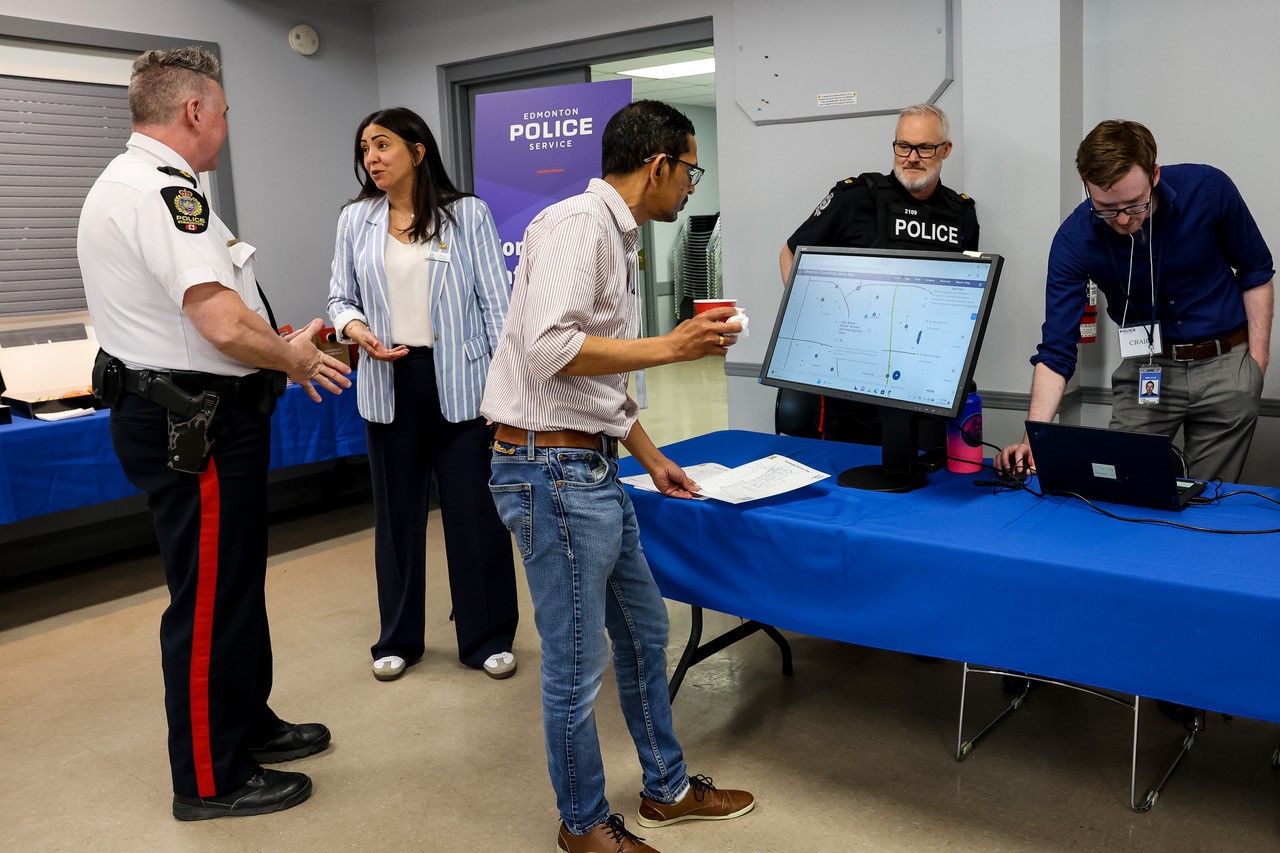
The open houses served multiple purposes: gathering valuable feedback on organizational priorities, showcasing successes and innovations, and helping the public better understand the complexities of modern policing. Attendees consistently described the sessions as informative and approachable. Many noted that meeting officers in a non-enforcement setting reduced anxiety around police interactions and helped build trust.
As one attendee summarized, “The fact that EPS is even here shows an organization committed to listening, learning, and building trust with the communities they serve.”
The success of the 2025 Open Houses underscores the value of a transparent, accessible engagement and reinforces EPS’ commitment to strengthening relationships with all Edmontonians.

OSKAYAK POLICE ACADEMY 2025
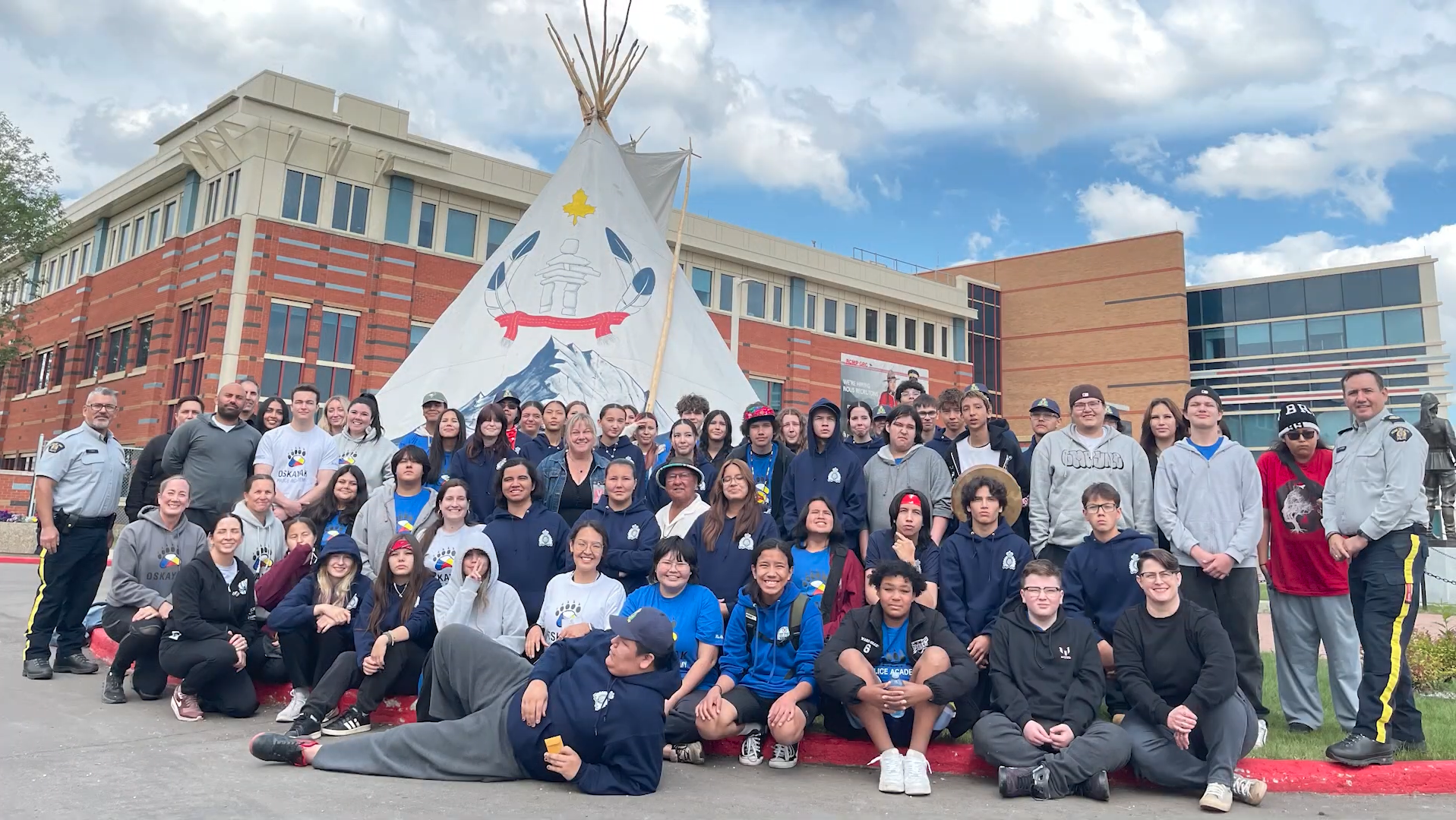
Now in its 11th year, the Oskayak Police Academy (OPA) continues to create meaningful opportunities for Indigenous youth in Edmonton. This two-week program, designed for self-identified Indigenous youth in grades 10 to 12, blends hands-on policing experiences with Indigenous worldviews. Its purpose is to help young people explore their potential, challenge stereotypes, and build meaningful connections with police and the broader community.
The OPA’s impact extends far beyond the program. Families, friends and community partners, including the Bent Arrow Traditional Healing Society, play an important role in supporting participants and carrying the program’s lessons forward. These relationships contribute to ongoing efforts toward trust, understanding, and reconciliation.


To date, more than 265 Indigenous youth have taken part in the Academy. Over 30 EPS sections and units participated, including Tactical, Canine, Air 1, Forensics and others.
Beyond building strong relationships with Indigenous youth, OPA has helped foster greater trust, understanding, and positive change within Indigenous communities. “We bring them into the space where they can get connected to their culture with officers and kind of bring both worlds together. We bring them into policing spaces as well. So, it’s education for both sides,” said Indigenous Relations Advisor, Abby Sly.
Congratulations to this year’s Oskayak Police Academy graduates! Your leadership and voices continue to shape a stronger future for our community.
3RD ANNUAL CHIEF’S PRIDE BREAKFAST AND PRIDE FLAG RAISING CEREMONY
On June 1, EPS hosted the 3rd Annual Chief’s Pride Breakfast at the Bison Lodge. More than 130 people attended to celebrate Pride, highlight ongoing efforts to strengthen inclusion and belonging, and show support for our 2SLGBTQ+ colleagues across the organization.
The event brought together sworn and civilian members, and community partners for a morning of connection and reflection. The Pride Raising Ceremony followed, symbolizing EPS’ continued commitment to creating a workplace, and a city, where everyone feels valued, respected, and safe.

HONOURING THOSE WHO SERVED
Soccer homecoming for fallen police hero
Ten years after the loss of Constable Dan Woodall, members of the EPS honoured his legacy with a special tribute soccer match against the Greater Manchester Police (GMP). The event marked a meaningful homecoming, reconnecting the two police services and the communities Constable Woodall dedicated his life to.
“This homecoming match meant a lot to us, it was a celebration of Dan’s legacy, bridging two police services and the communities that he gave his heart to,” said Constable Bruce McGregor, who plays on the EPS Blues Soccer Team and worked alongside Constable Woodall in Southwest Branch Patrol.
Constable Woodall was tragically killed in the line of duty on June 8, 2015, while attempting to arrest a hate crime suspect in Edmonton. His death was not only deeply felt in Edmonton, but across the ocean in Greater Manchester, England – where he grew up, and served with the GMP, before moving his family to Canada and joining the EPS. Dan loved soccer, and those who knew him felt that a friendly “football” match would be a friendly tribute. Over time, the Woodall Cup became an annual tradition celebrating the values he embodied: teamwork, community, and unity.
“This is such an honour for our two boys to know the impact their father had, said Claire Woodall, widow of the fallen officer. “We’ll always have a special place in our hearts, and forever be linked to, the wonderful citizens of Edmonton.”
The Woodall Cup continues to stand as a powerful reminder of Constable Woodall’s legacy and the enduring bonds between the communities he served.

MEMORIAL WALL AND REVITALIZATION OF EZIO FARAONE PARK ENSURES OFFICERS NOT FORGOTTEN
The Memorial Wall at EPS Headquarters has been refreshed and rededicated to honour the memories of Edmonton’s fallen officers. The updated installation features glass-panel portraits, short biographies, and brief descriptions of the circumstances surrounding each officer’s deaths, offering a dignified and permanent tribute to their service.
Ten EPS members have lost their lives in the line of duty. The memorial is arranged chronologically, beginning with Constable Frank Beevers in 1918, and extending to the most recent deaths, Constable Travis Jordan and Constable Brett Ryan in 2023.
Last year, EPS also took meaningful steps to revitalize Ezio Faraone Park, as part of a rededication ceremony. The park now features banners honouring all ten fallen officers, and their names have been inscribed on the base of the statue of Constable Faraone, ensuring their sacrifices are recognized in a public, accessible space.
“These officers made the ultimate sacrifice while serving our community and deserve to be honored in a number of ways throughout the EPS and in our community to forever remember them,” says Kevin Kobi, EPS Chief Administrative Officer.
Together, the Memorial Wall, and the revitalized park stand as enduring reminders of the courage, commitment, and service of those who gave their lives protecting Edmonton.

HONOURING CONSTABLE BRETT RYAN AND CONSTABLE TRAVIS JORDAN
On Saturday, November 15, 2025, first responders gathered at the Cst. Brett Ryan Community Arena in Spruce Grove for the inaugural In Their Honour Invitational Hockey Tournament. Created by Laurie and Bob Ryan in memory of their son, EPS Constable Brett Ryan and his partner, Constable Travis Jordan, the event paid tribute to two officers that were killed in the line of duty on March 16, 2023.
The tournament brought together members of the emergency services community in an atmosphere of camaraderie, competition, and shared remembrance. It served as a powerful reminder of the deep bonds that connect first responders and the enduring impact of Constable Ryan and Constable Jordan’s service.

A MURAL TO HONOUR CONSTABLE BRETT RYAN FOR HIS SERVICE AND LOVE OF HOCKEY
A new mural created by St. Albert artist Josh Harnack now stands inside the recently opened Heavy Metal Centre in Spruce Grove, paying tribute to Constable Brett Ryan’s love of hockey and his dedication to community service. Positioned behind the players’ benches in the arena that bears his name, the mural stands as a lasting tribute to his impact – on the ice, in the community, and within EPS.

NATIONAL DAY FOR TRUTH AND RECONCILIATION
The National Day for Truth and Reconciliation is a profound opportunity to honour Indigenous people across Canada and acknowledge the deep impact of our shared histories. It is a time to reflect on the legacy of residential schools, recognize the resilience of survivors, and reaffirm our responsibility to learn, listen, and act.
As we mark this day, we are reminded that reconciliation is not a single moment or annual observance. It’s an ongoing journey – one that requires commitment, humility, and meaningful action throughout the year. Through continued learning, strengthened relationships, and a willingness to confront difficult truths, we move closer to building trust and fostering healing with Indigenous communities.

SMILE COOKIE CAMPAIGN
The Edmonton Police Foundation was selected as the recipient of the 2025 Tim Hortons Smile Cookie Campaign, creating a significant opportunity to strengthen vital youth initiatives in the community. With 100% of Edmonton’s Smile Cookie proceeds directed to the Foundation, this partnership directly supports programs that promote the well-being and development of young people in our community.
Funds raised through the campaign will help advance Youth Diversion and Intervention Programs, key initiatives that provide guidance, support, and positive pathways for youth at risk of becoming involved in the justice system. These programs play an essential role in early intervention, helping young people build resilience, develop life skills, and stay connected to supportive networks.
The Smile Cookie Campaign not only raises funds but also brings the community together around a shared commitment to helping Edmonton’s Youth thrive.

SANTA SLEIGHS IT: EPS AIR 1 DELIVERS HOLIDAY MAGIC
On Christmas Eve, EPS’ Air 1 helicopter spotted a very special visitor flying into the city, Santa himself. In a festive holiday video shared across EPS social media channels, Santa and his reindeer can be seen soaring alongside Air 1 as they make their way to deliver presents across Edmonton.
The lighthearted clip quickly captured attention online, spreading holiday cheer throughout the city and far beyond. With more than 2 million views on Facebook, it has become one of EPS’ most successful social media videos, resonating with audiences for its warmth, humour, and sense of community.
Moments like this highlight the human side of policing and the joy of connecting with Edmontonians in creative, memorable ways.

Goal 4

Innovate and Advance as One Team
What it means: EPS is committed to working as one unified team, making decisions that consider the needs of the entire organization and encouraging a culture where innovation, continuous improvement, and collaboration thrive. By supporting creativity, and embracing new ideas, and fostering shared responsibility, EPS strengthens its ability to adapt, grow, and deliver effective policing services to the community.

EPS Performance Measure Results
| Measures: | 2023 | 2024 | 2025 | CY vs LY |
|---|---|---|---|---|
| New Technological Solutions Piloted or Deployed | 12 | 26 | 22 |
Source: EPS
WHAT THIS TELLS US
Advancing Technology and Innovation
In 2025, EPS piloted or implemented 22 new technological solutions including automated disclosure, interview room upgrades, several lifecycle replacements, and map modernization tools. These advancements support more efficient operations, improved member safety, and enhanced service to the community.
- Edmonton Transit Safety Technology Pilot: As part of efforts to improve safety on transit, EPS tested a new mapping and tracking system that provides real‑time officer locations and detailed indoor maps of transit spaces. This technology improves situational awareness and speeds up police response in complex environments, such as LRT stations, by giving officers a clearer understanding of what’s happening underground before they arrive.
- Body‑Worn Video Expansion: EPS continued to expand its use of body‑worn cameras and upgraded its digital evidence systems to meet provincial requirements. These updates ensure that frontline interactions are consistently recorded, and that video evidence can be stored, managed, and shared more efficiently. The result strengthened accountability, increased transparency, and improved quality of investigations.

KEY HIGHLIGHTS
CRIME MANAGEMENT PROGRAM
EPS implemented a modernized approach to crime management designed to improve how crime is prevented, investigated, and coordinated across the Service. The model integrates three key components which include Virtual Investigations, CompStat, and Peregrine, which collectively supports a more coordinated, intelligence-led approach to community safety.
Virtual Investigations (VI) is a centralized unit that handles appropriate non-emergency and deferred calls for service. By completing certain investigations remotely, the unit provides faster follow-ups for community members while allowing frontline officers to remain available for urgent calls and visible policing. Since launching in June 2025, the unit has completed more than 2,400 investigations, helping improve response times for both emergency and non-emergency service requests.
CompStat introduces a structured process for reviewing crime trends, tracking investigative and prevention efforts, and assigning operational accountability. Regular reviews of crime patterns and response strategies help ensure that emerging issues are identified early, and that resources are directed where they are most needed across Edmonton’s neighbourhoods.
Peregrine is a real-time public safety platform that brings together information from multiple police systems into a single operational view. This integrated data environment helps officers and analysts identify crime patterns more quickly, share intelligence across teams, and support more informed operational decision-making.
Together, these initiatives support a more coordinated and responsive approach to crime management. By improving how information is shared, monitored, and acted upon, EPS is strengthening its ability to address crime trends and respond to community concerns across the city more effectively.
Police Operations Chief Devin Laforce leads the Crime Management Program under the new Integrated Operations Bureau, which is designed to be strategically focused, while leveraging the full operational capacity of the service. The Crime Management Program will continue to grow, with additional initiatives launching in 2026.
EPS BOMB UNIT CENTRE OF EXCELLENCE
The EPS Bomb Unit launched its new Centre of Excellence in 2025, Canada’s first and only training facility recognized by the U.S. National Institute of Standards and Technology (NIST), and one of just eight worldwide. Built at the Nixon Memorial Training Centre, the facility was developed with NIST guidance to advance standards in ground and air robotics training for public safety.
The Centre features specialized training environments, including two sea cans with obstacles that can be used by members who want to enhance their skills in robot operation, flying a drone, or maneuvering in confined spaces while wearing a bomb suit.
“It’s a very proud moment for Grant [Jongejan] and I,” said EPS Bomb Technician Paul Olekszyk. “But we didn’t do it for the recognition. We did it to make sure we have good quality bomb techs not only for Edmonton but the rest of Canada, too.”
To mark its opening, EPS hosted a two-day training event collaborating with partners from NIST, Canadian Explosive Technician Association, Canadian Emergency Responders Robotics Association, and Canada Public Safety, along with participating members from Edmonton Fire Rescue, Alberta Wildfire, SAIT, and Transport Canada. The event included ground and air robotic testing, Human Factors testing, and a demonstration of a new heavy lift Remotely Piloted Aircraft Systems (RPAS) application.
The new facility is a key step toward establishing a National Certification Program. Future plans will focus on building foundational skills for bomb technicians and RPAS operators. Years in the making, this project shows the EPS Bomb Unit as innovators in enhancing the professionalism of bomb technicians.

COLLABORATIVE POLICING UNIT PRESENTED
WITH COMMENDATION FOR CRIME PREVENTION EXCELLENCE
The EPS Collaborative Policing Unit (CPU) has been honoured with the Chief’s Commendation Unit Award, recognizing its outstanding efforts in crime prevention, intervention, and community safety.
“While the leadership and coordination roles of individual members have anchored CPU’s success,” says Chief Warren Driechel, “it is the combined effort of the full team that makes this nomination especially fitting.”
In 2025, CPU led high-impact Retail Crime Blitzes at Southgate and Kingsway malls, resulting in over 70 major arrests, including a Canada-wide warrant and the prevention of an armed robbery. Conducted in partnership with the Northern Alberta Shopping Centre’s Association and Alberta Retail Crime Council, led to an immediate reduction in criminal activity.
Beyond enforcement, CPU has strengthened ties with retail partners through monthly strategy meetings, training sessions, and intelligence-sharing initiatives. Their work has earned national recognition, including a Law Enforcement Partnership Award from the Retail Council of Canada.
CPU also played a key role in the coordinated response to a tragic incident in December 2024, when a security guard was killed an Edmonton apartment complex. The unit demonstrated professionalism and compassion in working with the City of Edmonton and supporting affected residents.
The CPU’s dedication, innovation, and partnership-driven approach continue to make a meaningful impact on community safety across Edmonton.

ONE TEAM, ONE LOOK
As part of EPS’ ongoing commitment to modernization and unity, senior officers transitioned from white shirts to navy blue shirts.
“A unified look across all ranks shows that we serve together as one team, one service, reflecting our commitment to working side by side regardless of role,” says Corps Sergeant Major James McLeod.
The transition follows a broader uniform review conducted in 2021 and 2025 by the Senior Leadership Group and was approved as an immediate step forward in aligning EPS with evolving practices across Canadian policing. The blue shirt enhances public recognition and visibility, helping build familiarity and trust through consistent daily interactions.

EPS LAUNCHES BLOCKCHAIN INVESTIGATION TEAM
EPS has established a Blockchain Investigation Team within the Financial Crimes Section to strengthen its ability to combat crypto-related crime. The specialized team will focus on tracing transactions, preserving digital evidence, supporting asset recovery, and assisting with complex financial investigations.
“Having a strategy, the right team and tools allow us to investigate, trace, and combat the illicit use of cryptocurrencies” said Staff Sergeant Mike Zaparyniuk.
While digital currencies offer many legitimate benefits, they are increasingly used in scams, money laundering, and illicit payments. By enhancing its investigative capabilities, EPS is ensuring it can effectively respond to financial crime and protect the community in an increasingly digital landscape.
The creation of the Blockchain Investigation Team marks an important step forward in modernizing financial crime enforcement and staying ahead of emerging threats.

TESTING FACIAL RECOGNITION USING BODY WORN VIDEO CAMERAS
EPS is exploring new technologies that support safer interactions between officers and the community. In December 2025, the EPS became the first police service in the world to test Axon’s new facial recognition feature integrated into Body‑Worn Video (BWV) cameras. The goal of this Proof of Concept was to assess whether the technology could work with EPS databases to help identify individuals with safety flags, cautions, or outstanding warrants for serious offences.
During the testing period, officers performed their duties as usual. When a camera was recording, the facial recognition feature operated automatically in “Silent Mode,” meaning officers did not receive any real‑time alerts. After each shift, specially trained officers reviewed the footage to evaluate the software’s accuracy, and any potential matches were verified by trained personnel.
“As we focus on continuous improvement around enhancing officer situational awareness and public and officer safety”, we are pleased to be the first police service in the world to test this technology,” says Acting Superintendent Kurt Martin with the EPS’ Information and Analytics Division. He emphasized that while technology may become a valuable tool, it will not replace human judgment essential to policing and investigative work.
To ensure responsible use of emerging technology, the EPS submitted a Privacy Impact Assessment to Alberta’s Information and Privacy Commissioner. Findings from the Proof of Concept and potential next steps will be shared in 2026.

Goal 5

Support and Grow Diverse Talents
What it means: EPS is committed to supporting the well-being of the people that make up the organization and creating a workplace where everyone can thrive. This includes fostering a diverse and inclusive environment, developing talent at all levels, and building a resilient workforce equipped to meet the evolving needs of the community. By investing in its people, EPS strengthens its ability to deliver effective, compassionate, and high-quality policing services.


EPS Performance Measure Results
| Indicators: | 2023 | 2024 | 2025 | CY vs LY |
|---|---|---|---|---|
| Applicants for recruit and EOP classes | 642 | 715 | 646 |
Source: EPS
| Measures: | 2023 | 2024 | 2025 | CY vs LY |
|---|---|---|---|---|
| Percentage of Women Employees | 37.21% | 38.20% | 37.86% | |
| Proportion of Sworn to Civilian Employees | 68:32 | 65:35 | 65:35 | |
| Employee Attrition - Sworn | 4.05% | 3.68% | 3.82% | |
| Employee Attrition - Civilian | 9.80% | 10% | 6% | |
| Number of New Police Officers (Recruits Hired & EOPs Hired) | 134 | 154 | 140 |
Source: EPS
WHAT THIS TELLS US
Recruitment and diversity
- EPS’s enhanced recruitment and training approach continued to strengthen community relationships, expand outreach to diverse groups, and reduce barriers for applicants from underrepresented communities. This approach contributed to a diverse cohort of police recruits across three Recruit Training Classes (RTC 163, 164, and 165).
- Among the new recruits, 74% held a diploma or degree in a wide range of fields; 14% were women; 8% identified as Indigenous; 23% identified as belonging to a racialized group; and 32% spoke one or more languages in addition to English. The average age of the 2025 recruit group was 29.6. The diversity reflects continued progress toward building a workforce that better represents the community it serves.
Workforce trends and insights
- In 2025, sworn member attrition remained stable, while civilian attrition declined compared to the previous year. Throughout the year, EPS gained valuable insights from workforce data, engagement feedback, and operational experience, helping the organization better understand the evolving needs and challenges of employees across the service. These insights are helping EPS strengthen employee well-being, support retention, and guide future workforce planning.

KEY HIGHLIGHTS
BUILDING THE FUTURE OF POLICING: EPS RECRUITMENT IN 2025
The EPS Recruitment & Selection Section (RSS) continued to build strong momentum in 2025. Application volumes remained strong at 646 submissions.
Strengthening Applicant Readiness
Recruitment remains focused on reducing barriers and supporting applicants through programs designed to build confidence and preparedness. Key initiatives include:
- Applicant Mentoring Program (AMP) – formerly the Recruit Mentoring Academy, which provides structured guidance to help applicants navigate the recruitment process.
- Run with Recruiters (RWR) – offering physical readiness support and direct engagement with EPS members.
In late 2025, EPS introduced the updated intake process requiring applicants to complete and pass the Alberta Police Cognitive Ability Test (APCAT) prior to submitting a formal application. This change is intended to enhance overall application quality and encourage early engagement from prospective recruits.
RECRUITMENT OUTREACH & EVENTS
RSS expanded its outreach efforts throughout 2025, completing over 60 recruitment events and delivering dozens of presentations to community-groups, schools, and post-secondary institutions.
Working closely with the EPS Equity, Inclusion & Human Rights Branch, recruitment increased its focus on Indigenous outreach to strengthen relationships, expand awareness, and encourage interest in policing careers among Indigenous applicants.
Recruitment continues to modernize applicant touchpoints through technology, public feedback, and personalized recruitment strategies, which include:
- Women in Policing: Initiatives offering structured programs, dedicated sessions, and one-on-one interactions with female officers to build confidence and preparedness.
- The Athlete to Officer Program: Targets former athletes whose discipline, teamwork, and resilience align with the demands of policing.
- The Experienced Officer Program (EOP): Enabling EPS to bring in skilled officers with prior policing experience, reducing training time and accelerating operational readiness.

WELCOMING NEW RECRUITS AND EXPERIENCED OFFICERS
In 2025 the Edmonton Police Service welcomed:
- 133 new constables
- 7 experienced officers
Training for new recruits continues to emphasize cultural awareness and community engagement through practicum placements at local social agencies.

BLUE GLOVES, BIG IMPACT: CONSTABLE LOUP GUIMOND NAMED DEMPSEY SERVICE AWARD RECIPIENT
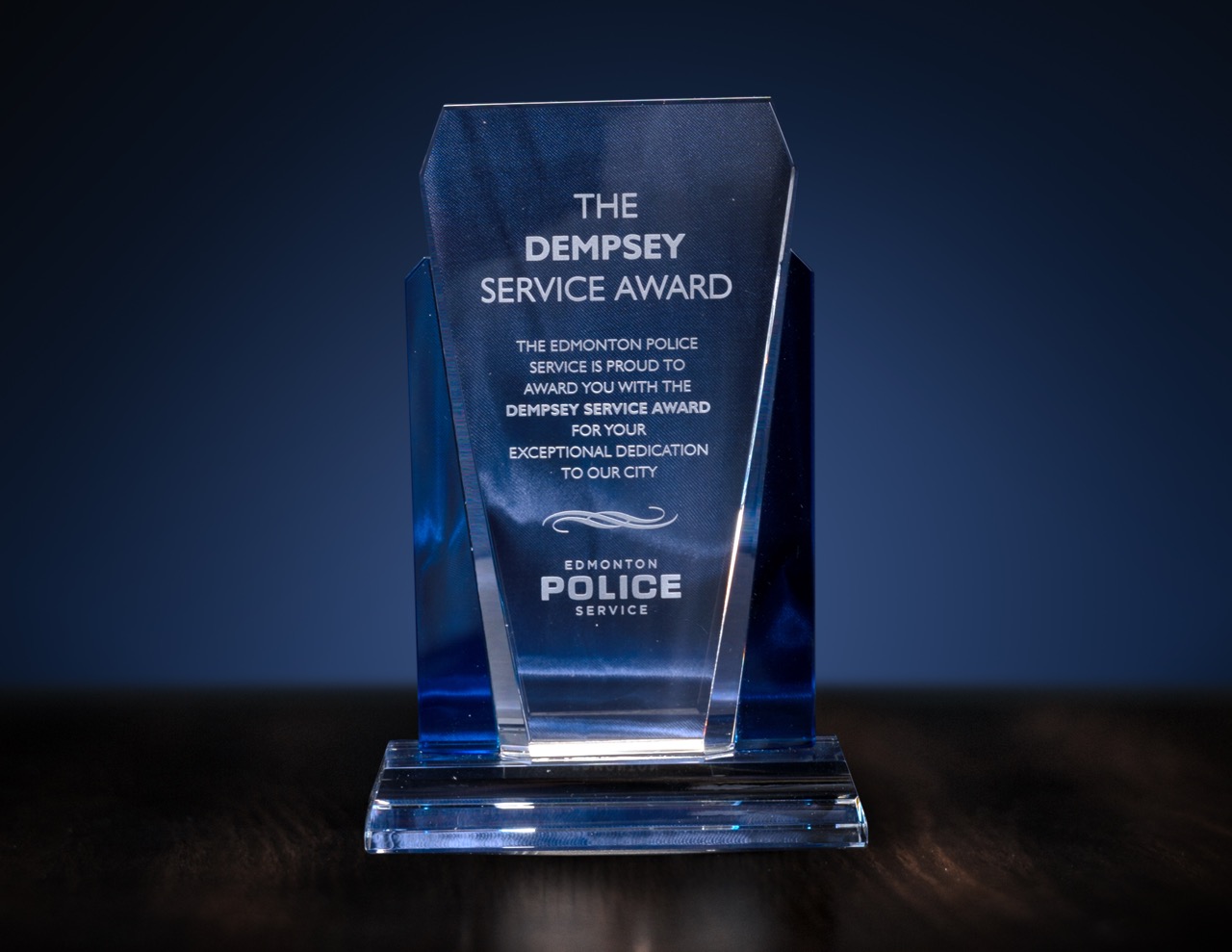
Constable Loup Guimond has been named the latest recipient of the Dempsey Service Award for recognizing his exceptional dedication to supporting Edmonton youth and strengthening community connections.
Constable Guimond was nominated by several colleagues for his leadership with the “Blue Gloves Boxing” initiative, a program designed to build trust, resilience, and belonging among vulnerable youth. The idea emerged after a call for service connected him with a family whose children, many of them Indigenous, were facing significant challenges. Seeing an opportunity to make a meaningful difference, he began developing the program out of West Division as part of a broader community engagement project.
Drawing on his own life experiences and passion for fitness, he partnered with Alliance Boxing Club to provide free access to training, mentorship, and a supportive environment. Through donated equipment, consistent coaching, and genuine relationship building, the program became a safe space where youth can develop confidence, discipline, and a sense of community. Constable Guimond brings a unique policing lens that helps advocate for youth around housing, employment, and post-secondary education opportunities, meeting them where they are and helping them imagine what’s possible.
“He’s crystal clear with these youths,” one nominator wrote. “He’s here to guide them—but they also need to show commitment. That accountability is part of the power of this program.”
Constable Guimond’s work reflects the spirit of the Dempsey Service Award, rooted in compassion, consistency, and a belief in second chances. His leadership continues to create pathways for young people to thrive and strengthen the bonds between police and community.
KING CHARLES III CORONATION MEDAL
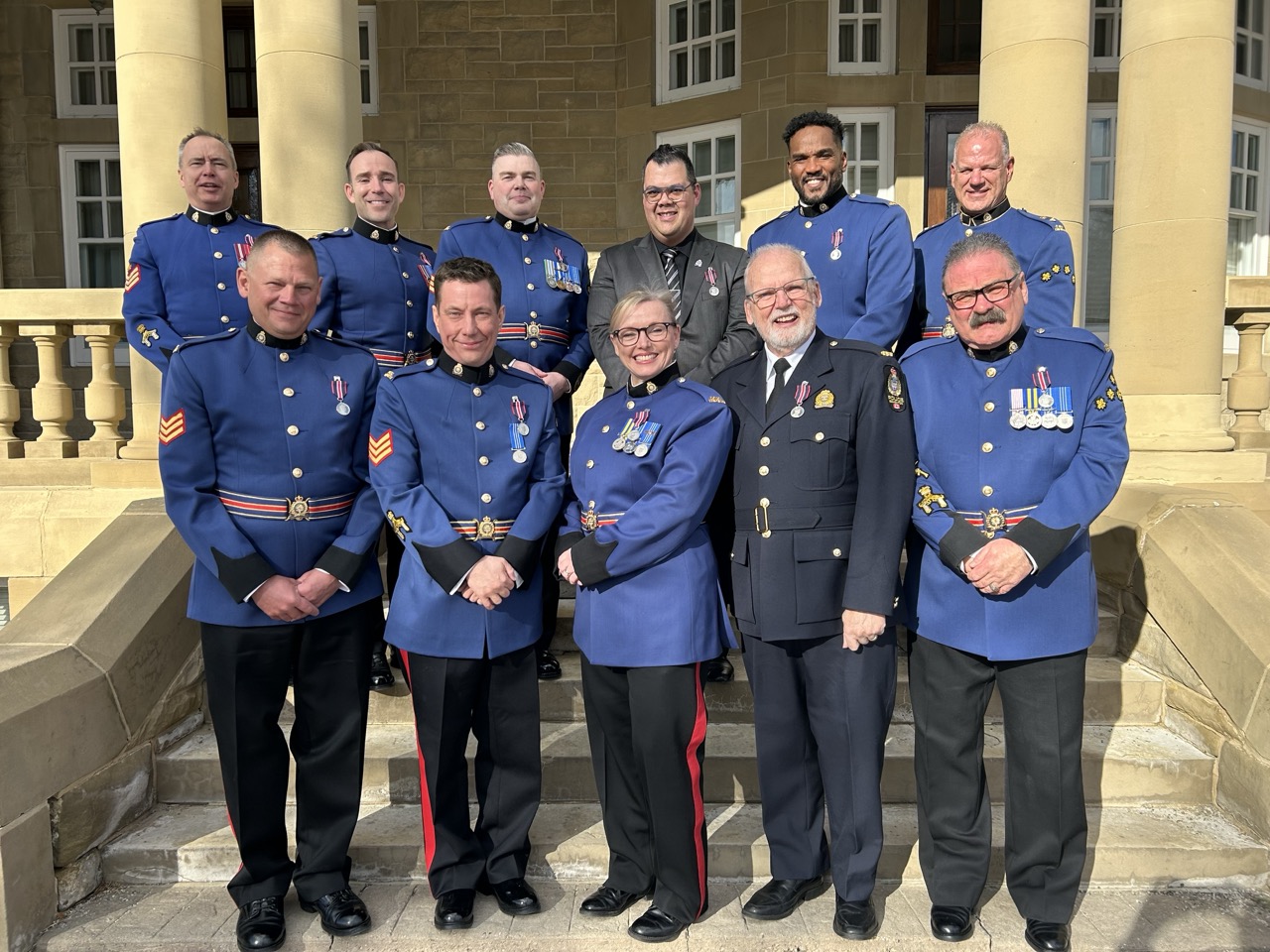
Thirteen members of the EPS have been awarded the King Charles III Coronation Medal, a national honour recognizing exemplary service and dedication to Canada. The medal commemorates the Coronation of His Majesty King Charles III as King of Canada and is presented to individuals who have made significant contributions to their communities and country.
Eleven of the medals were formally presented by Her Honour, the Honourable Salma Lakhani, Lieutenant Governor of Alberta, at Government House on February 27.
Receiving the award reflect the commitment, professionalism, and impact EPS members demonstrate every day in service to Edmonton and Canadians.
TOP COP AWARD FOR CONSTABLE THOMAS CLEAL
Constable Thomas Cleal of Downtown Beats has been named the 2024 Top Cop by the Kiwanis Club of Edmonton – Oil Capital, recognizing his exceptional dedication to strengthening community connections and improving the lives of vulnerable Edmontonians.
Thomas’ tireless efforts to support individuals facing complex challenges have made him a trusted presence in the downtown core. Through consistent outreach, compassionate engagement, and a commitment to meeting people where they are, he has helped build meaningful relationships that bridge gaps between law enforcement and the community. Whether offering guidance, connecting people to resources, or simply showing up with empathy and respect, Constable Cleal exemplifies what it means to serve both in uniform and as a role model.
Thomas’ work reflects the spirit of the Top Cop Award, service rooted in humanity, perseverance, and genuine desire to make Edmonton safer and stronger for everyone.

EPS MEMBERS RECEIVE OUTSTANDING ACHIEVEMENT AWARDS
Two members of the EPS have received Outstanding Achievement Awards from the Alberta Association of Chiefs of Police (AACP), highlighting exceptional leadership, innovation, and service in support of public safety.
Sergeant Matt Leblanc with the School Resource Officer Unit received the Award for Leadership for his consistent ability to identify and address gaps in public safety, community engagement, and police operations.
Constable Mike Roszko, a forensic examiner with the ALERT Internet Child Exploitation (ICE) team, received the Award for Outstanding Service for his work creating a tool that detects and categorizes images of child sexual abuse material (CSAM). The tool uses artificial intelligence to ease the burden on forensic examiners, investigators, and other personnel, who are responsible for the arduous task of categorizing CSAM.
These awards reflect the dedication, ingenuity, and compassion EPS members bring to their work every day, strengthening the community safety and advancing policing in Alberta.
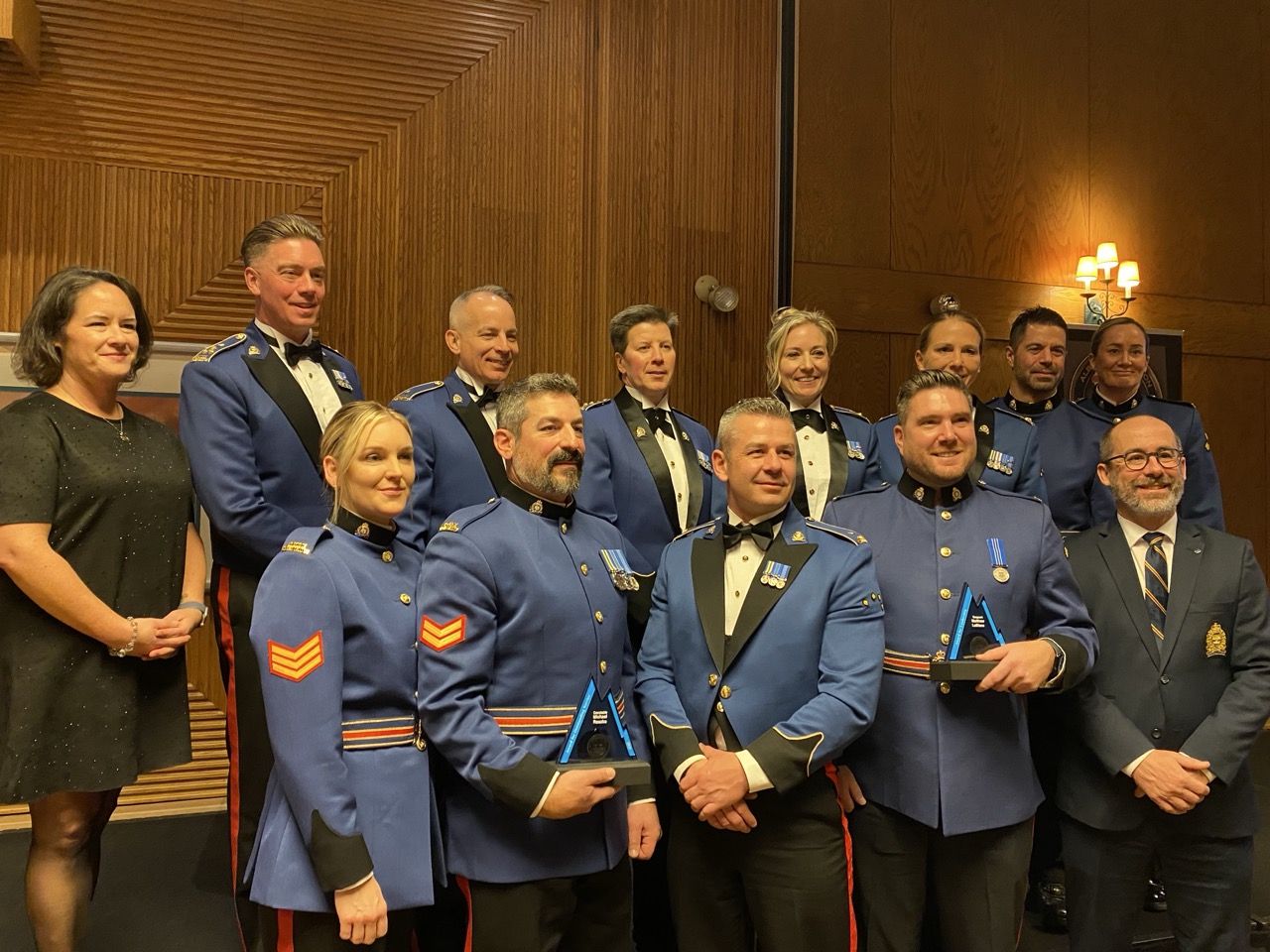
EMERGENCY COMMUNICATION OFFICERS GRADUATE
EPS welcomed 28 new civilian Emergency Communications Officers (ECOs) and celebrated the graduation of more than 70 additional members who completed specialized training within the Emergency Communications Management Branch (ECOMB) at their formal graduation on Wednesday, April 16, 2025. These graduates join the frontline of public safety as professionals often described as “the first of the first responders.”
ECOs play a critical role in emergency response, serving as the first contact for people in crisis and coordinating resources that keep Edmontonians safe. The training prepares them to manage high pressure situations with calm, clarity, and compassion, skills essential to supporting both the public and responding agencies.
These graduates strengthen the foundation of emergency response in Edmonton, ensuring that every call for help is met with expertise, care, and unwavering commitment.

CONGRATULATIONS YOUTH RECRUIT ACADEMY GRADS!
Two week-long Youth Recruit Academy programs ran over the summer, welcoming 80 high school students selected from a record of 265 applicants, the highest interest the program has ever seen. Coordinated by the EPS School Resource Officers (SRO) Unit, the academy gives young people hands-on introductions to policing while building leadership, teamwork, and confidence.
Through practical workshops, physical training, scenario-based activities, and mentorship from EPS members, students gain meaningful insight into what it takes to serve their community. The program continues to be a powerful way to inspire future leaders, strengthen relationships with youth, and showcase the values at the heart of modern policing.
The 2025 graduates demonstrated commitment, curiosity, and resilience, qualities that will serve them well no matter where their paths lead.

PSD AMOK AND PSD BADY RETIRE FROM THE CANINE UNIT
Two of the EPS’ most accomplished canines, PSD Amok and PSD Bady have retired from the Canine Unit, marking the end of remarkable careers defined by dedication, discipline, and exceptional service to the community.
PSD Amok is believed to be the longest-serving canine in the unit’s history, with more than nine years of injury-free service alongside handler Constable Costa. Together, they responded to over 2,600 calls, made more than 250 arrests, and earned multiple awards, including a Tracking Dog title and placements at the 2017 Canadian Police Canine Association National Championships.


PSD Bady and Constable Crockett, also leave behind an impressive legacy. The pair responded to more than 1,600 calls and made over 140 arrests, with PSD Bady earning multiple awards, including Top Dog at the 2022 Spokane Advance Handler Course and placements at the 2022 and 2024 CPCA National Canine Trials. During his nine years in the unit, Constable Crockett also worked with PSD Pitt and PSD Cezar, served as a trainer in Dog Master Training Classes, and mentored 11 puppy holders.
Both PSD Amok and PSD Bady demonstrated discipline and partnership that define the Canine Unit. Their retirements mark the end of two outstanding careers, and the beginning of well-earned time to simply enjoy being dogs.

EPS EMPLOYEES SHARE IN FIVE-TIME ALBERTA TOP EMPLOYER WIN
The EPS has been named one of Alberta’s Top Employers for the fifth time, a recognition that reflects the dedication and professionalism of the people who make up the organization. The designation highlights strong performance across workplace culture, employee benefits, communication, professional development, and community involvement, areas where EPS continues to invest in meaningful, long-term improvement.
At the heart of this achievement is recognizing that people are our strengths. EPS employees, both sworn and civilian, drive innovation, support one another, and contribute to a workplace where collaboration and continuous learning are valued.
Being recognized as a Top Employer underscores EPS’ ongoing efforts to build a modern, supportive, and inclusive workplace, one that fosters career growth, encourages new ideas, and reflects the evolving needs of the community it serves.

FINANCIAL SUMMARY
EPS OPERATING BUDGET
| Major Category of Revenues & Expenditures ($000's) | Budget 2024 | Actual 2024 | Budget 2025 | Actual 2025 |
|---|---|---|---|---|
| Revenue | ||||
| Traffic Safety Act Fines | $10,262 | $ 6,959 | $8,861 | $7,282 |
| Transfer from Reserve | - | - | - | - |
| Provincial Grants | 45,278 | 50,438 | 49,477 | 50,571 |
| Other Revenue (Note 1) | 37,438 | 40,426 | 38,897 | 45,006 |
| Total Revenue | 92,978 | 97,823 | 97,235 | 102,859 |
| Expense | ||||
| Personnel | 444,623 | 456,703 | 486,154 | 499,663 |
| Non-Personnel | ||||
| Furniture, Equipment, Information Technology, Materials and Supplies |
26,222 | 26,629 | 28,509 | 28,943 |
| Contracts and Services | 37,190 | 33,873 | 35,848 | 33,375 |
| Vehicles | 10,132 | 10,650 | 9,937 | 10,736 |
| Facilities | 25,378 | 22,558 | 23,116 | 22,454 |
| Other Expenditures (Note 2) | 16,508 | 13,963 | 14,734 | 13,546 |
| 115,430 | 107,673 | 112,144 | 109,054 | |
| Total Expense | 560,053 | 564,376 | 598,298 | 608,717 |
| Position before Adjustments | 467,075 | 466,554 | 501,063 | 505,858 |
| Transfer to/(from) EPS Operating Reserve | 521 | (4,795) | ||
| Net Position (Tax Levy Funding) | $467,075 | $ 467,075 | $501,063 | $501,063 |
| Total Budgeted Full Time Equivalent (FTE) | 3,010.60 | 3,041.30 |
Note 1: Other Revenue includes Secondments, Tow Lot, Police Information Checks, Alarm Control, Extra Duty, School Resource Officers, etc.
Note 2: Other Expenditures includes travel and training, insurance premiums, debt servicing costs, memberships, and transfers of expenses that qualify as tangible capital assets, etc.
Operating Budget Highlights 2025 At Eps
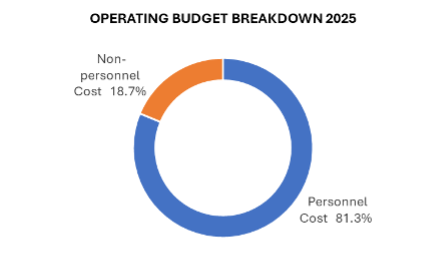
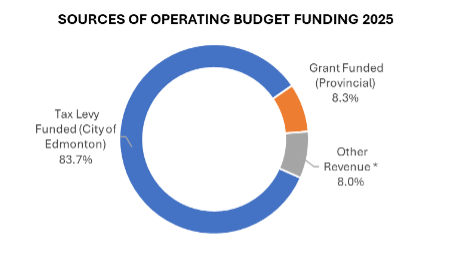
OPERATING BUDGET FUNDING 2025 AT EPS
| Amount (in millions) | Percentage | |
| Tax Levy Funded (City of Edmonton) | $501.1 | 83.7% |
| Grant Funded (Provincial) | $49.5 | 8.3% |
| Other Revenue * | $47.8 | 8.0% |
| Total | $598.3 | 100% |
Note: Other Revenue includes [Traffic Safety Act Fines, Police Information Check Section (PICS), Tow lot, School Resource Officer (SRO), etc.]
2025 TAX-SUPPORTED OPERATING EXPENDITURE BUDGET AT THE CITY OF EDMONTON
2025 EXPENDITURE BUDGET
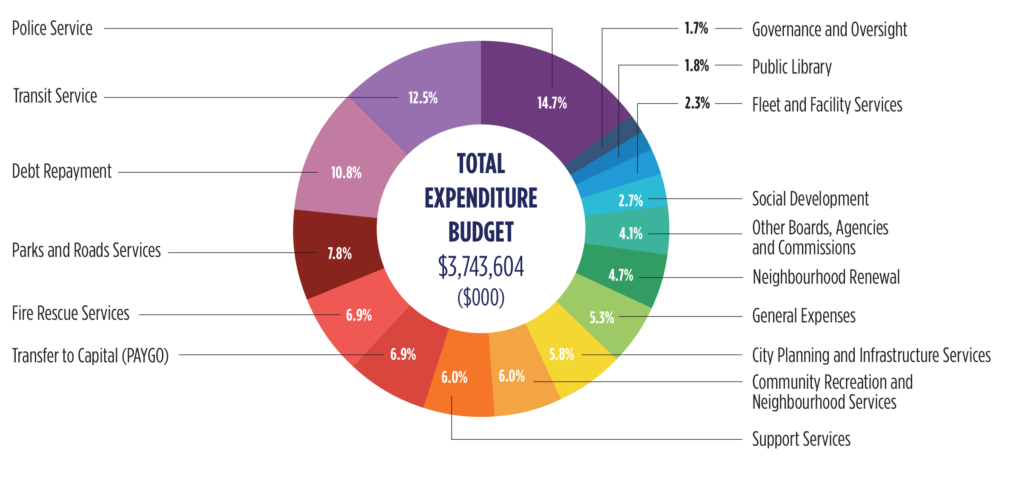
Source: Budget Highlights 2025, City of Edmonton
Note:
2 Certain Expenditure Budget groupings consist of multiple departments:
- Governance and Oversight includes Offices of the City Auditor, City Manager, City Clerk, and Mayor and Council
- City Planning and Infrastructure Services includes Urban Planning and Economy and Integrated Infrastructure Services
- Community Recreation and Neighbourhood Services includes Community Recreation and Culture, and Community Standards and Neighbourhoods
- General Expenses includes Automated Enforcement, Capital Project Financing, and corporate wide expenditures
- Support Services includes Financial and Corporate Services, and others such as Talent Management, and Workforce Safety and Employee Health
FUNDING FORMULA FOR EPS
On August 23, 2023, City Council approved the revised EPS Funding Formula. Budget allocation for 2025-2026 was made during the 2024 and 2025 Fall Supplemental Operating Budget Adjustment process.
CHALLENGES IN CAPITAL BUDGET IN 2024 AND 2025
The 2023-2026 Capital Budget is comprised of 11 active profiles (5 standalone profiles and 6 composite profiles). The total 2023-2026 Capital Budget is $105.248 million which includes the initial approved budget, subsequent budget carryforward and supplemental capital budget adjustments.
In December 2022, City Council approved approximately 25% of the Commission supported budget requirement for Police Equipment, Radio Lifecycle, IT Applications and IT Infrastructure renewal projects for 2023-2026. Subsequently, the following changes were approved by City Council during SCBA discussion:
- $10.610 million in December 2023
- $27.380 million in June 2024
This has resulted in funding of 81% of the Commission supported budget requirement and a $10.452 million shortfall for Police Equipment, IT Applications and IT Infrastructure renewal projects for 2023-2026.
During the 2024 Spring SCBA discussions, the city budget office indicated that renewal funding is a priority and, if or when, future funding opportunities are realized the Critical Unfunded Renewal Scoring exercise will be used to allocate funds. If there are no further funding approvals by City Council, the 2023-2026 funding shortfall will be considered and included with the 2027-2030 capital budget cycle.
Appendix A: Average Call Response Time
Definitions Used:
Average Best Response Time: This refers to the average amount of the time (minutes) it takes from when a call for service is received to when the first patrol police officer arrives at the location. This includes the time to evaluate the call, dispatch the call and travel time to the location.
P1: Priority 1 Calls (Emergency): Highest Priority – Life at imminent risk. Immediate response may reduce or prevent loss of life or serious bodily harm.
P2: Priority 2 Calls (Emergency): High Priority – Urgent need for police presence. Immediate response may reduce risk to public safety.
P3: Priority 3 Calls (Managed): Priority – Time sensitive response required. No imminent threat exists. Nature of the occurrence requires a time sensitive response for investigation or intervention.
Table 1: Average Response Time by Call Priority 2024 vs 2025
| Call Priority | Average Best Response Time (minutes) | Number of Events | ||
|---|---|---|---|---|
| 2024 | 2025 | 2024 | 2025 | |
| P1 | 12.6 | 13.1 | 3,556 | 3,833 |
| P2 | 13.1 | 13.3 | 8,847 | 7,308 |
| P3 | 48.7 | 47.1 | 103,652 | 106,469 |
Appendix B: CORPORATE PERFORMANCE FRAMEWORK
EPS uses a corporate performance management framework to drive accountability and use data and information to assess and improve organizational performance. The framework is based on and aligns with the Canadian Police Performance Measurement Framework that was co-developed between the Canadian Association of Police Chiefs and Statistics Canada.
The indicators and measures in this report are part of the corporate performance framework. It is important to highlight the differences between indicators and measures, as outlined below:
Indicators: These broad data points are indicative of the safety and wellness of the communities that EPS serves. EPS believes that the actions it takes to influence indicators must be complemented by many other partners and stakeholders to make a meaningful difference.
Measures: These data points are more targeted and speak to things that are more within the span of control of EPS to directly influence.
Our goals and corresponding initiatives are identified in the EPS 2023-2026 Strategic Plan, while targeted outcomes are laid out in our 2023-2026 Business Plan along with allocation of resources and expected timelines.
EPS leadership provides an update on its Business Plan to the Edmonton Police Commission (EPC) twice a year in April and in September.
The Annual Report functions as a public update on the progress made toward goals and outcomes set in the EPS Strategic Plan.
Timely information on crime statistics and trends is also available to the public through the Community Safety Data Portal.
Through these data driven and evidence-based mechanisms, we hold ourselves accountable to the people of Edmonton and provide a means for them to assess our performance as an organization that plays a leading role in improving public safety and community well-being.
| ELEMENT | MEASUREMENT | ACCOUNTABLITY | MEDIUM OF REPORTING | FREQUENCY OF REPORTING |
|---|---|---|---|---|
| Goal | Indicator | Edmonton as a Community | Annual Report (External) | Dependent on Data Source |
| Strategic Outcomes | Outcomes Measures | Chief and Deputy Chiefs | Annual Report (External) | Annually |
| Bureau Outcomes | Outcomes Measures | Deputies and Superintendents/Executive Directors | Bureau Dashboard (Internal) | Quarterly |
| Initiatives / Projects | Project Measures | Project Sponsor | EPMO Dashboard (Internal) | Real Time |
| Programs | Outcome Measure / Output Measures / Process Measures | Branch Leadership | Public and Internal Dashboards | Varies |
Appendix C: Edmonton Police Service Governance Framework
In democracies, police must remain independent while being accountable to the public. To balance these priorities, Alberta’s Police Act requires that City Council appoint an independent police commission to oversee the police, rather than having them report directly to City Council. The Government of Alberta may also appoint a Commissioner as deemed necessary. While City Council approves the overall police budget, it is the Edmonton Police Commission that determines how the budget is allocated. The Commission also oversees the police chief, establishes police policies, and monitors the process for addressing complaints about police conduct. The Alberta Serious Incident Response Team (ASIRT) investigates police incidents and complaints involving serious injury, death or other significant allegations of misconduct. The Alberta Law Enforcement Review Board (LERB) hears appeals related to complaints of officer misconduct.
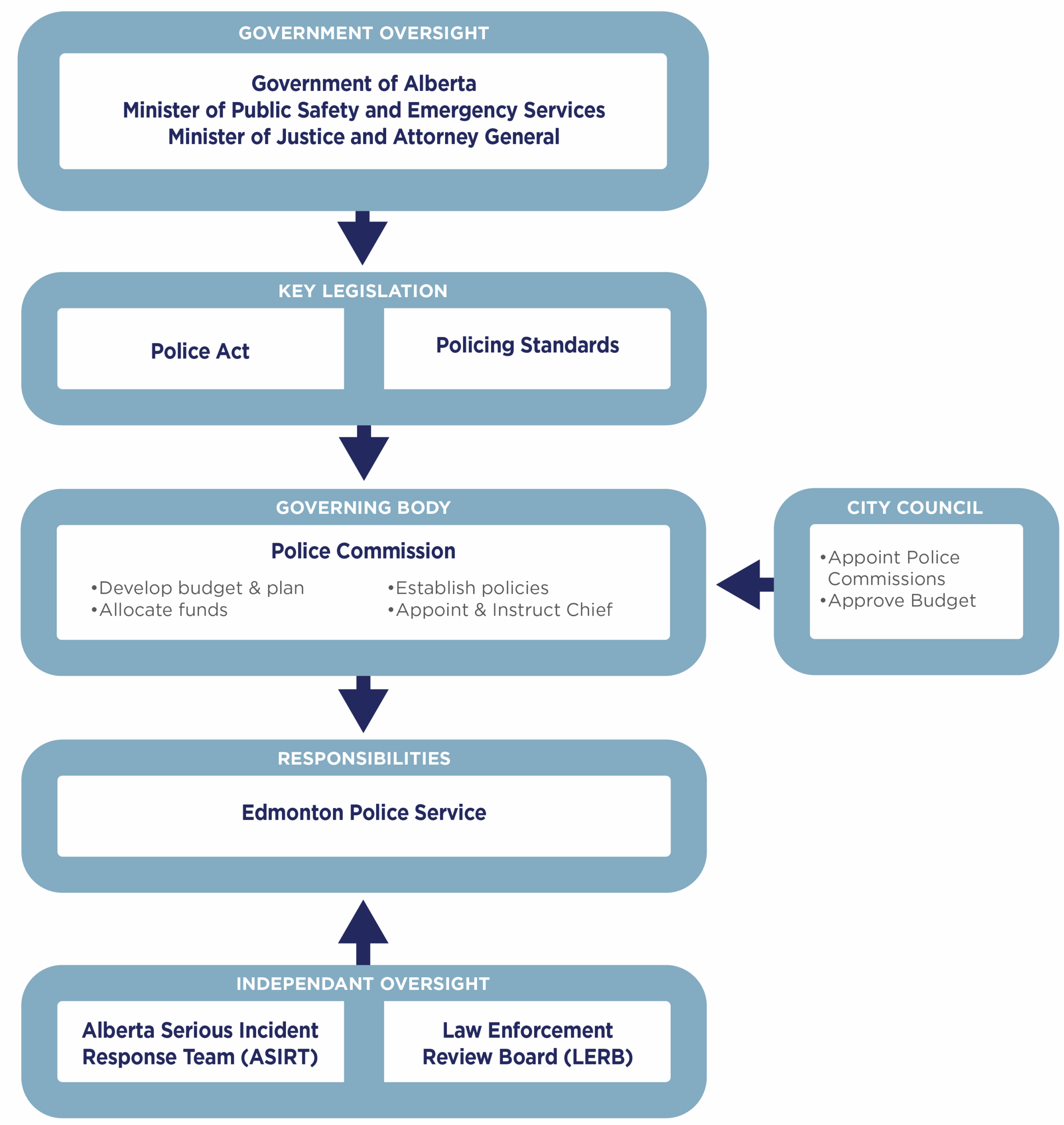
Appendix D: Description of Measures
Goal 1: Balance Support and Enforcement
| Indicators | What it means | Why It Matters |
|---|---|---|
| Violent Crime Rate | Violent Crime rate is the number of violent incidents reported to police per 100,000 population. Rates are used to make comparisons over time and among geographic areas with different populations. Violent crimes involve the use or threat of violence against a person such as homicide, attempted murder, assault, sexual assault and robbery. |
These indicators help measure community safety, enabling law enforcement and policymakers to identify crime trends, allocate resources effectively and implement strategies to reduce crime and improve public well-being. |
| Non-Violent Crime Rate | Non-violent Crime rate is the number of violent incidents reported to police per 100,000 population. This includes, for example, property offences, drug offences, traffic violations, identity fraud and identity theft and administration of justice violations, etc. |
These indicators help measure community safety, enabling law enforcement and policymakers to identify crime trends, allocate resources effectively and implement strategies to reduce crime and improve public well-being. |
| Property Crime Rate | Property Crime rate is the number of property incidents reported to police per 100,000 population. Property crimes involve unlawful acts to gain property, but do not involve the use or threat of violence against the person. They include offences such as break and enter, theft, and mischief. |
This measure provides an overview of the current state of property crime in Edmonton. It also reflects the progress made by law enforcement and support efforts in reducing or maintaining property crime at a low and stable level. |
| Violent Crime Severity Index | The Violent Crime Severity Index (VCSI) measures the frequency and severity of violent crimes in an area, factoring in both the number of crimes and their seriousness, with greater emphasis on severe offenses like homicide and sexual assault. | These measures help assess the overall severity of violent and non-violent crime on a community, guiding law enforcement and policymakers in addressing crime trends, allocating resources and improving public safety. |
| Non-violent Crime Severity Index | This indicator assesses the frequency and severity of non-violent crimes, such as property crimes, drug offenses and traffic violations, by assigning different weights to each type of crime. | These measures help assess the overall severity of violent and non-violent crime on a community, guiding law enforcement and policymakers in addressing crime trends, allocating resources and improving public safety. |
| Violent Crime Weighted Clearance Rate | The weighted clearance rate assigns values to violent crimes that are solved according to their seriousness, with more serious crimes being given a higher crime severity weight. For example, the clearing of a homicide would represent a greater contribution to the overall weighted clearance rate value than the clearing of a criminal harassment incident. |
These indicators provide a better understanding of crime resolution by considering the severity of each offense. More serious crimes, whether violent or non-violent, have a greater impact on the overall rate, reflecting the priority given to addressing high-impact crimes. |
| Non-violent Crime Weighted Clearance Rate | The weighted clearance rate assigns values to non-violent crimes that are solved according to their seriousness, with more serious crimes being given a higher crime severity weight. For example, the clearing of a break and enter violation would represent a greater contribution to the overall weighted clearance rate value than the clearing of a trespassing at night violation. |
These indicators provide a better understanding of crime resolution by considering the severity of each offense. More serious crimes, whether violent or non-violent, have a greater impact on the overall rate, reflecting the priority given to addressing high-impact crimes. |
| Traffic Fatalities | Measures the number of deaths as a result of vehicle collisions. This measure also includes pedestrian deaths. | This helps assess trends, identify high-risk areas, enhance road safety and allocate resources efficiently. It also informs policy development, supports public awareness campaigns and evaluates the effectiveness of safety measures |
| Traffic Fatality Rate per 100,000 Population. | This represents the number of deaths resulting from traffic collisions per 100,000 people in the city within a given year. | It helps identify trends in road safety while accounting for changes in the city's population. This measure enables accurate comparisons over time, providing a clearer understanding of whether road safety is improving or deteriorating as the city grows. |
| Breaches – Violations | This measure tracks the number of offenses where individuals fail to comply with legal conditions, such as failure to appear in court, breach of probation or violation of court orders. | It is important for EPS to monitor compliance with laws, identify patterns of criminal behavior, ensure public safety and guide enforcement strategies. It helps in addressing issues proactively and improving community trust. |
| Social Disorder Occurrences | This measure refers to the number of non-criminal events where a community member interacted with law enforcement due to unmet basic needs such as food, shelter, income and healthcare, including addiction or mental health treatment. | These measures highlight the state of social disorder and domestic violence occurrences in Edmonton. They also reflect the progress made by federal, provincial and municipal government institutions, EPS, and social sector partners in improving citizens' conditions, supporting victims and reducing or containing these incidents. |
| Domestic Violence Occurrences | This measure refers to the number of occurrences, both criminal or non-criminal in including actual or threatened physical or sexual force, in an intimate relationship. It may include a single act of violence, or a number of acts forming a pattern of abuse through the use of assaultive and controlling behavior. An “Intimate Relationship” is defined as a relationship between opposite-sex or same-sex partners. These relationships vary in duration and legal formality, and include current and former dating relationships, current and former common-law relationship, current and former married relationship and persons who are the parents of one or more children, regardless of their marital status or whether they have lived together at any time. |
These measures highlight the state of social disorder and domestic violence occurrences in Edmonton. They also reflect the progress made by federal, provincial and municipal government institutions, EPS, and social sector partners in improving citizens' conditions, supporting victims and reducing or containing these incidents. |
| Measures | What it means | Why It Matters |
|---|---|---|
| Violent Crime Clearance Rate | The violent crime clearance rate represents the proportion of violent incidents solved by the police. Police can clear an incident by charge or by means other than the laying of a charge. The most common reasons for clearing an incident by other means include: departmental discretion, the complainant declines to press charges, referral to a diversion program or departmental policy. |
These measures reflect the proportion of both violent and non-violent criminal incidents that have been resolved, offering insight into how effectively the justice system, including law enforcement and other involved agencies, addresses and resolves crimes. |
| Non-Violent Crime Clearance Rate | The non-violent crime clearance rate represents the proportion of non-violent incidents solved by the police. Police can clear an incident by charge or by means other than the laying of a charge. The most common reasons for clearing an incident by other means include: departmental discretion, the complainant declines to press charges, referral to a diversion program or departmental policy. |
These measures reflect the proportion of both violent and non-violent criminal incidents that have been resolved, offering insight into how effectively the justice system, including law enforcement and other involved agencies, addresses and resolves crimes. |
| Referrals – Crime and Trauma-Informed Support Services | Number of referrals supported, managed or coordinated by CTSS Team. | This measure indicates the level of emotional support, information and referrals services provided by EPS to victims of a crime and/or tragedy. |
| Youth Diverted | This refers to the number of youths diverted by EPS members. This includes the following options: 1. Diversion in SRO equipped schools through the PAYOFF program. 2. Diversion through a formal police-led collaboration with community agency partners that incorporate restorative justice components called DIVERSIONFirst. |
Youth referral shows EPS’ efforts to strike a balance between enforcement and support by diverting youth out of the justice system and transitioning them to a support network. This is a restorative justice approach that aims to keep people away from a life of crime and the arrest-remand cycle |
| HELP Interactions with Community Members | This refers to the number of interactions that the HELP Team, medical navigators, and the Indigenous Outreach Team had with community members. This includes dispatched calls for service, on scene patrol assists and self-generated interactions. |
This measure shows EPS and its partners’ support to vulnerable persons for their day-to-day needs and challenges in order to connect and transition them to better-suited community support services. This is a direct off-ramp for vulnerable people to get out of the justice system and into the social, health and community resources they truly need. |
| Dispatched Calls for Service - Public Generated | This refers to the number of public-initiated calls for police assistance that resulted in officers being dispatched. | This helps to assess the demand for police resources, identify crime trends or community concerns and allocate personnel effectively. It also offers valuable insight into public safety and resource needs, allowing the EPS to adjust strategies, enhance service delivery, and ensure prompt responses to emergencies. |
| Dispatched Calls for Service - Officer Generated | This refers to the number of sworn member-initiated calls for police assistance that resulted in officers being dispatched. | This helps to assess the demand for police resources, identify crime trends or community concerns and allocate personnel effectively. It also offers valuable insight into public safety and resource needs, allowing the EPS to adjust strategies, enhance service delivery, and ensure prompt responses to emergencies. |
| Total Dispatched Calls for Service | This refers to the total number of calls for police assistance initiated by either the public or sworn members that led to the dispatch of officers. | This helps assess the demand for police resources, identify crime trends or community concerns and allocate personnel effectively. It also offers valuable insight into public safety, response times and resource needs, allowing the EPS to adjust strategies, enhance service delivery, and ensure prompt responses to emergencies. |
| Referrals – Police and Crisis Team (PACT) | This refers to the number of referrals supported, managed or coordinated by the PACT Team. | This proxy measure highlights EPS and its partner – Recovery Alberta - efforts to drive community safety and well-being by providing support to individuals who are in crisis with mental illness and addiction issues. |
| Proactive Police Time | This measures the percentage of patrol shift time that is dedicated to proactive activities that serve to prevent or solve crime and disorder. | This helps ensure that police resources are focused on crime prevention, community engagement and proactive problem-solving. It allows community police services to assess how effectively they are preventing crime, allocating resources and building positive relationships with the community, ultimately improving public safety and officer effectiveness. |
| Percentage of Public Interactions where Use of Force was Applied | This measures the percentage of police interactions with the public where force was used. | This measure supports accountability, transparency and ensures that force is applied responsibly. This metric also helps to focus on de-escalation strategies, strengthen community trust and continuously improve methods for handling interactions in a safe and respectful manner. |
| Traffic Warnings and Tickets Issued | This measures the total number of traffic tickets and warnings issued by EPS Officers as part of enforcement measures to improve traffic safety. | This metric helps promote safer driving, reduce collisions and ensure compliance with traffic laws. Monitoring this metric helps identify trends, allocate resources effectively and foster a proactive approach to preventing collisions and improving public safety. |
Goal 2: Partner and Advocate
| Measure | What It Means | Why It Matters |
|---|---|---|
| Research Partnerships & Agreements | This refers to the number of research and partnership agreements made by Research & Innovation Section (RIS) at EPS. | This measure helps foster collaboration, innovation and evidence-based practices. This also helps EPS develop new strategies, improve its services and strengthen community relationships, ultimately enhancing public safety and effectiveness. |
| Social Workers Contributed by Partners to Assist Frontline Members (monthly average) | This refers to the number of social workers provided by EPS partner organizations to support the HELP Team. | This measure helps to ensure effective collaboration in addressing complex social issues. By monitoring this, EPS can better allocate resources, enhance support for officers and improve outcomes for individuals in need, fostering a more holistic approach to public safety. |
Goal 3: Connect, Share and Evolve
| Indicator | What it means | Why It Matters |
|---|---|---|
| Number of Public Complaints | This refers to the number of public complaints received by EPS Professional Standard Branch. | It reflects community concerns and perceptions about police conduct and service quality. It helps assess public trust, identify areas for improvement, and ensure accountability. Tracking complaints supports efforts to improve service quality and maintain strong community relationships. |
| Rate of Complaints per 10,000 Dispatched Calls | This metric indicates the number of public complaints received for every 10,000 calls to which police officers were dispatched. | It helps assess service quality, track patterns over time, and support improvements, all while considering the volume of calls officers handle. |
| Public Complaints Substantiated | This refers to the number of public complaints or concerns that meet the criteria outlined in the Police Act and are forwarded for formal investigation by the EPS Professional Standards Branch. | This represents public complaints that are determined to meet the criteria set out in the Police Act and are directed to a formal police investigation. These cases make up a relatively small percentage of the total complaints received each year. Tracking this helps promote accountability, enhance transparency, identify trends, and highlight areas within the service where policies or practices may need improvement. |
| Online Reports Received | This refers to the number of reports submitted by citizens online, including incidents motivated by hate, sexual assault, and crimes such as break and enter, property damage, vehicle damage, lost property, theft from a vehicle under $5,000, and theft under $5,000. | This helps to streamline non-emergency crime reporting, allowing officers to focus on urgent matters. This system also aids in timely documentation, improves resource allocation, and supports crime trend analysis, ultimately enhancing public safety and community engagement. |
| Total Visits to EPS Website | This refers to the total number of unique sessions on the EPS website (www.edmontonpolice.ca) within a specific time period. A session is typically defined as a single visit by a user, regardless of the number of pages viewed. | This helps the EPS assess public interest, track community engagement, and evaluate the effectiveness of its online services and communication. It also supports more informed resource planning and ensures key information is accessible to the public. |
| Total Visits to EPS Community Safety Data Portal | This refers to the total number of unique sessions on the EPS Community Safety Data Portal (communitysafetydataportal.edmontonpolice.ca) within a specific time period. A session is defined as a single visit by a user, regardless of the number of pages they view. |
This statistic helps the Edmonton Police Service assess public engagement with crime and safety information. It highlights how the Community Safety Data Portal promotes transparency, informs the community, and supports efforts to improve public access to safety data. |
| Measure | What it means | Why It Matters |
|---|---|---|
| Language Support Services | This measure tracks the total instances of language translation services provided to EPS’ diverse communities to reduce language barriers, and is facilitated by the EPS Language Support Services team and the Interpret Manager app. | This proxy measure showcases the progress that EPS is making in removing or minimizing language barriers to service access for people whose first language is not English. |
| Events attended with marginalized communities. | This refers to the number of outreach activities, programs, or initiatives involving marginalized communities that were attended by the EPS Community Relations Section (CRS). | It highlights efforts to build trust, promote inclusivity and address the unique needs of diverse groups. It allows the EPS to strengthen relationships, ensure fair representation and foster a more supportive and collaborative approach to public safety. |
| Events Planned for Marginalized Communities | This refers to the number of outreach activities, programs, or initiatives involving marginalized communities that were organized by the EPS Community Relations Section (CRS). | It highlights efforts to build trust, promote inclusivity and address the unique needs of diverse groups. It allows the EPS to strengthen relationships, ensure fair representation and foster a more supportive and collaborative approach to public safety. |
| Total social media engagements | This refers to the total number of times the audience interacted (e.g., likes, comments, shares, and retweets) with a social media content related to EPS. The platforms tracked include Facebook, X (formerly Twitter), Instagram, LinkedIn, YouTube, and Threads. |
It measures how effectively the service is connecting with the community, sharing important information and fostering transparency. It allows the service to gauge public interest, address concerns and enhance communication, ultimately building trust and engagement with the community. |
| Social media engagement rate | This measures how actively people engage with EPS media content. It is calculated by dividing the total number of interactions by the total number of followers. |
This helps to measure how effectively the department is reaching and interacting with the community. A higher engagement rate shows that the service is successfully sharing relevant information, building trust and fostering positive relationships with the public through online platforms. |
| Number of News Releases | This refers to the number of official news releases issued by EPS to the media. News releases are used to inform the public about events, investigations, public safety issues or other relevant matters that the police want to communicate to the community or the press. |
It helps measure EPS' transparency, communication efforts and engagement with the public. Regular media releases keep the community informed, build trust and ensure that important information reaches a wide audience in a timely manner. |
Goal 4: Innovate and Advance as One Team
| Measure | What it means | Why It Matters |
|---|---|---|
| New Technological Solutions Piloted or Deployed | This measure refers to the introduction and testing of new technologies or systems designed to improve police work, enhance efficiency and boost public safety. | It highlights the service’s commitment to innovation and improving efficiency. It shows how the service is leveraging technology to enhance operations, increase public safety and stay ahead of emerging challenges, ultimately providing better service to the community. |
Goal 5: Support and Grow Diverse Talents
| Indicator | What it means | Why It Matters |
|---|---|---|
| Applicants for Recruit and EOP classes | This represents the number of applicants who meet the criteria for the Recruit Training Class (RTC) and Experienced Officer Program (EOP). | It helps EPS monitor the effectiveness of recruitment efforts, maintain staffing levels to meet operational needs, and support strategic workforce planning. It also offers valuable insights into applicant trends and diversity. |
| Measure | What it means | Why It Matters |
|---|---|---|
| Percentage of Women Employees | This measure represents the percentage of women among permanent employees within EPS, including both sworn members and civilian staff. | This measure highlights EPS’ progress towards having a diverse and inclusive workforce by supporting and/or growing the less-represented population groups (e.g., women) across the organization. A stable share over the years or growth in share will tell us that these employees feel comfortable joining and staying with EPS for a longer period. |
| Proportion of Sworn to Civilian Employees | This measure indicates the ratio of all permanent sworn members and civilian staff within EPS. | This proxy measure also indicates the diversity of perspectives and skillsets at EPS. Civilian members offer non-policing skillsets to support the work of the sworn members. They also represent a diversity of perspectives that enhance the capacity of EPS in delivering services to its constituents. The objective is not necessarily an increase in civilian staff members but to have the right mix of workforce to achieve the goals of the EPS. |
| Employee Attrition - Sworn | This measure indicates the percentage of permanent sworn members who have separated from the EPS through resignation, retirement, termination, or death | High turnover rates may be indicative of an inadequate growth environment or a disengaged or dissatisfied workforce. Turnover measures are valuable because they can also uncover unconscious bias, discriminatory practices or reveal a workplace climate that deters under- represented groups (e.g., women, Indigenous or racialized) from remaining at the organization. |
| Employee Attrition - Civilian | This measure highlights the percentage of civilian employees who have separated from the EPS as a result of resignation, retirement, termination, or death. | High turnover rates may be indicative of an inadequate growth environment or a disengaged or dissatisfied workforce. Turnover measures are valuable because they can also uncover unconscious bias, discriminatory practices or reveal a workplace climate that deters under- represented groups (e.g., women, Indigenous or racialized) from remaining at the organization. |
| Number of New Police Officers (Recruits Hired & EOPs Hired) | The number of new police officers reflects the hiring of both new recruits and experienced officers. | It signifies EPS' efforts to strengthen resources and its ability to tackle crime, improve public safety and meet the growing demands for safety, security and well-being driven by Edmonton’s expanding population. |